


AI Customer Service: What Businesses Need in 2026
AI customer service is no longer a future-facing experiment. In 2026, it is quickly becoming the operating model for businesses that need to answer more calls, resolve more questions, qualify more leads, and stay available long after office hours end.
For sales teams, support leaders, operations managers, and recruiting teams, the problem is familiar: customer expectations keep rising, call volumes are unpredictable, and hiring alone does not scale fast enough. Traditional support models struggle with wait times, inconsistent answers, missed after-hours opportunities, and fragmented tools. Modern AI customer support solves those gaps by combining voice automation, knowledge-grounded responses, CRM connectivity, and seamless human handoff into one practical system.
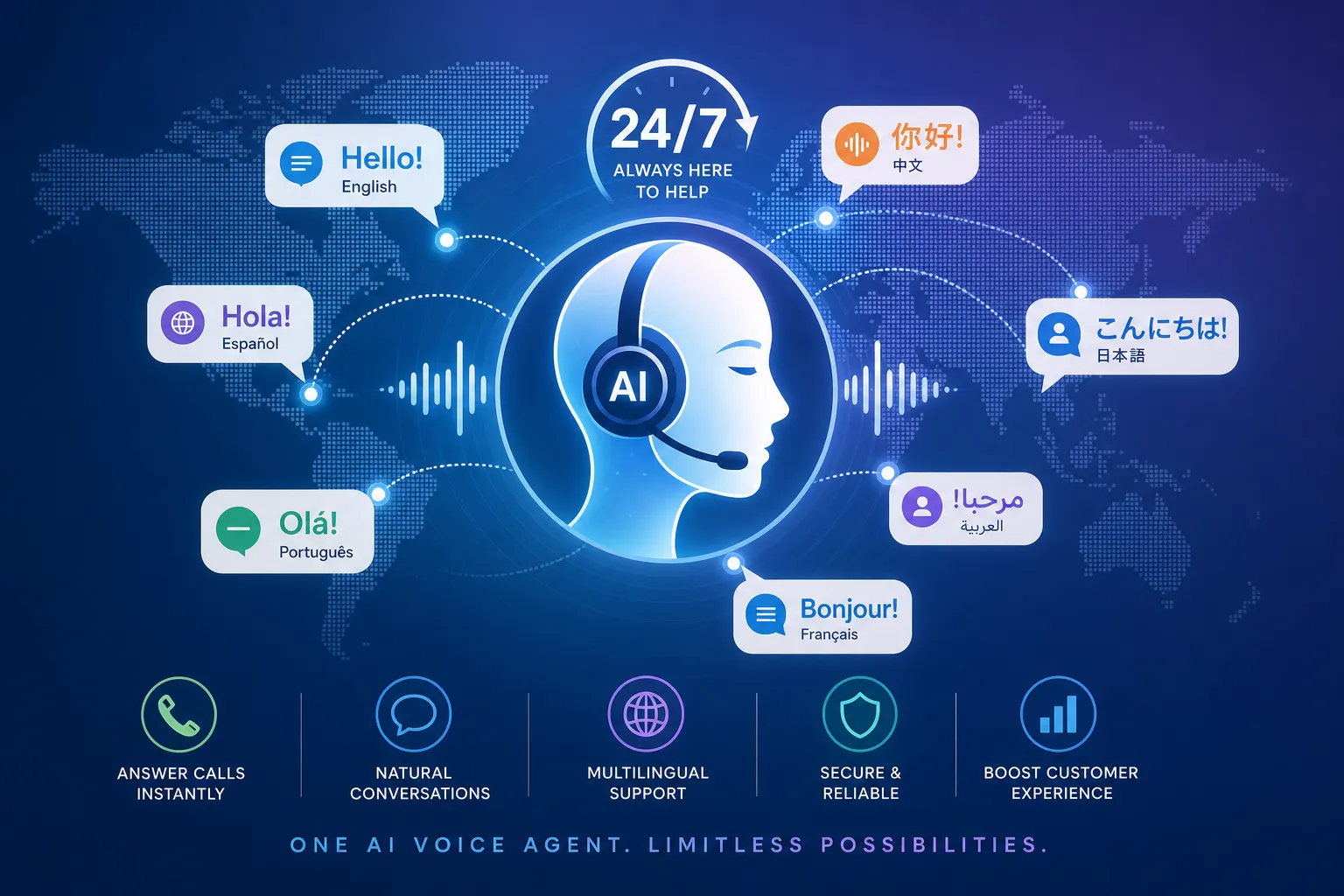
The biggest shift this year is that businesses no longer want vague “AI capabilities.” They want production-ready outcomes: real conversations, fast deployment, measurable savings, multilingual coverage, and workflows that actually connect to the rest of the business. That is exactly why platforms like Trikon are gaining traction. Instead of requiring a custom build or a dedicated AI team, Trikon lets businesses launch a live AI voice agent in under five minutes, with no-code setup, sub-second response times, support for 30+ languages, inbound and outbound calling, and direct integrations with CRM, calendars, WhatsApp, and automations.
What AI Customer Service Actually Means in 2026
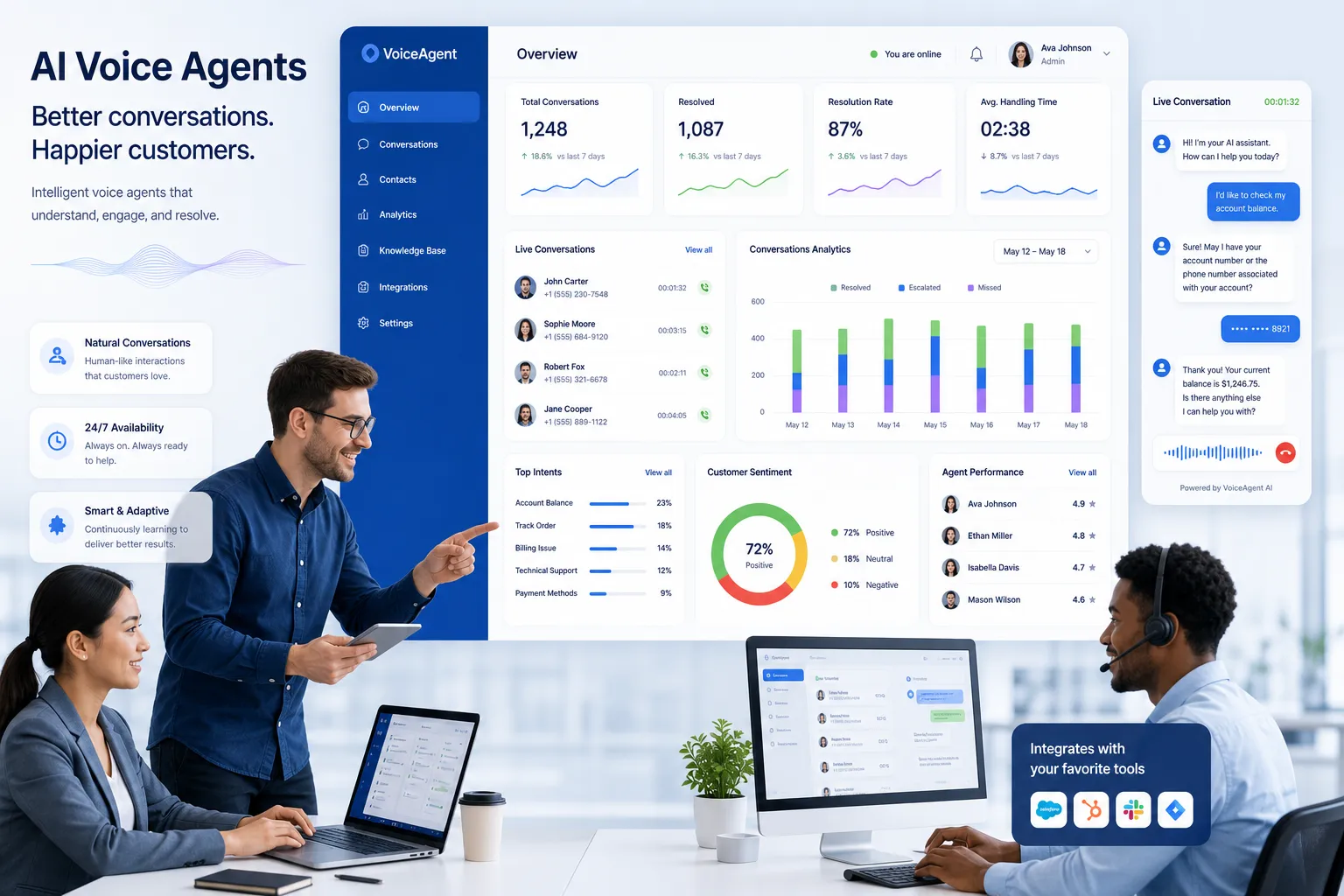
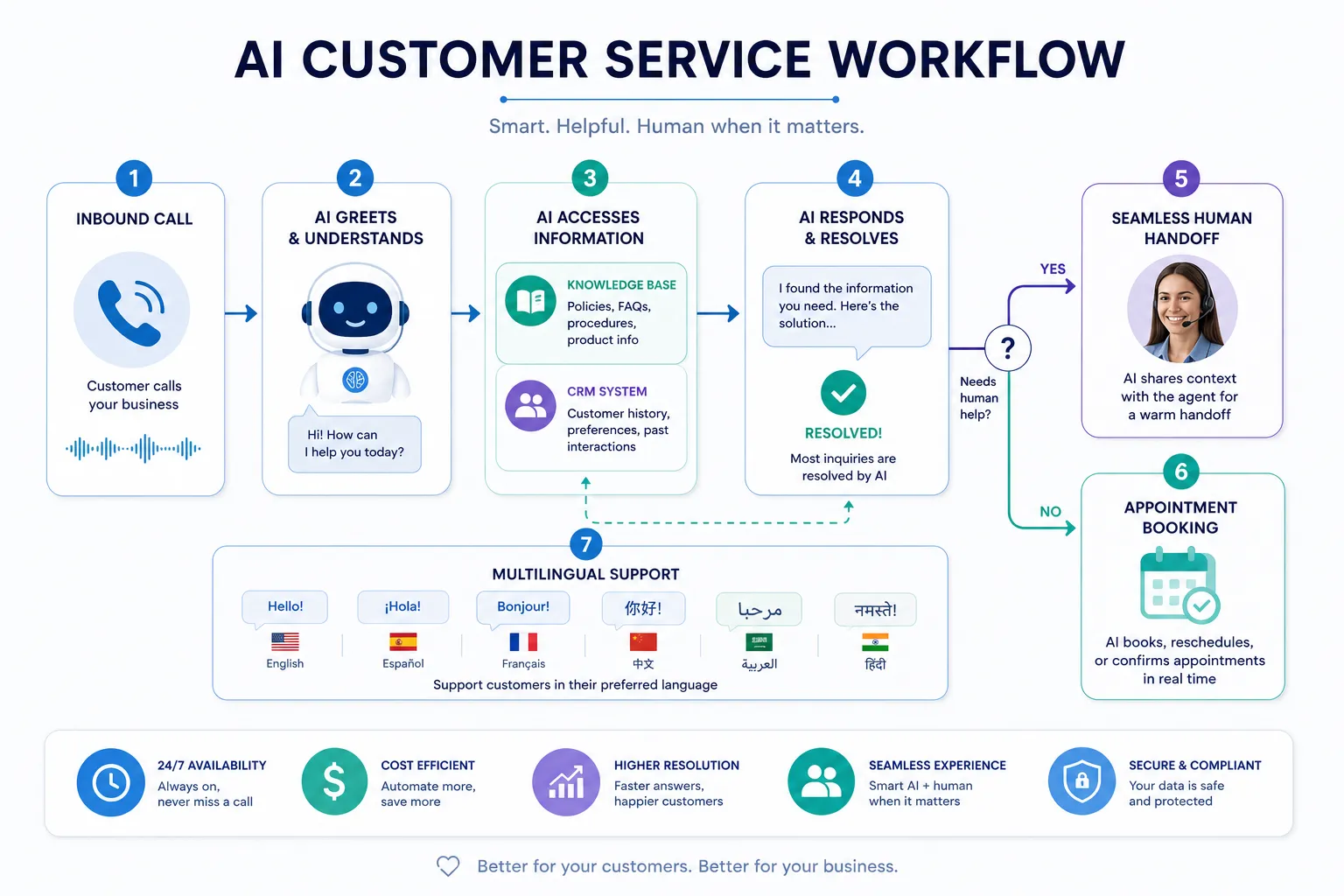
AI customer service refers to the use of conversational AI, voice agents, automation, and integrated business systems to manage customer interactions at scale. That includes handling inbound calls, answering FAQs, booking appointments, routing conversations, qualifying leads, updating records, and escalating to human staff when needed.
In 2026, the definition has matured. It is no longer just a chatbot on a website or a robotic IVR tree that frustrates callers. High-performing systems now combine:
natural voice conversations
real-time context awareness
business knowledge from websites, PDFs, FAQs, and internal documents
CRM and workflow integrations
multilingual support
live human transfer with conversation history intact
That shift matters because buyers and customers judge AI by outcomes, not novelty. If the system cannot answer accurately, take action, or hand off smoothly, it does not improve service.
Why Businesses Are Adopting AI Customer Support Faster This Year
Competitor articles consistently focus on cost savings, automation, and 24/7 service. Those are valid points, but they often stop short of the real reason adoption is accelerating: AI has become much easier to deploy in production.
Businesses are moving faster in 2026 because modern platforms eliminate the old blockers:
Old Barrier | What Businesses Needed Before | What Modern Platforms Enable Now |
|---|---|---|
Long implementation cycles | Months of development and vendor dependency | Go live in minutes or days |
Technical complexity | Dedicated AI engineers and conversation designers | No-code setup for operations teams |
Weak answers | Generic bot replies with low accuracy | Knowledge-grounded responses from business content |
Slow handoffs | Lost context between bot and human | Live transfer with full conversation history |
Single-channel limitations | One-off tools for phone, chat, and messaging | Unified communication across voice, WhatsApp, and workflows |
Unclear ROI | High setup cost and custom scoping | Transparent pricing and faster time to value |
This is where Trikon fits naturally into the market. Businesses can upload documents, point the system to their website or FAQs, define the persona and voice, connect a calendar or CRM, and launch an AI voice agent without building custom infrastructure. That matters for teams that need results now, not after a six-month implementation.
Traditional Support vs AI Customer Service
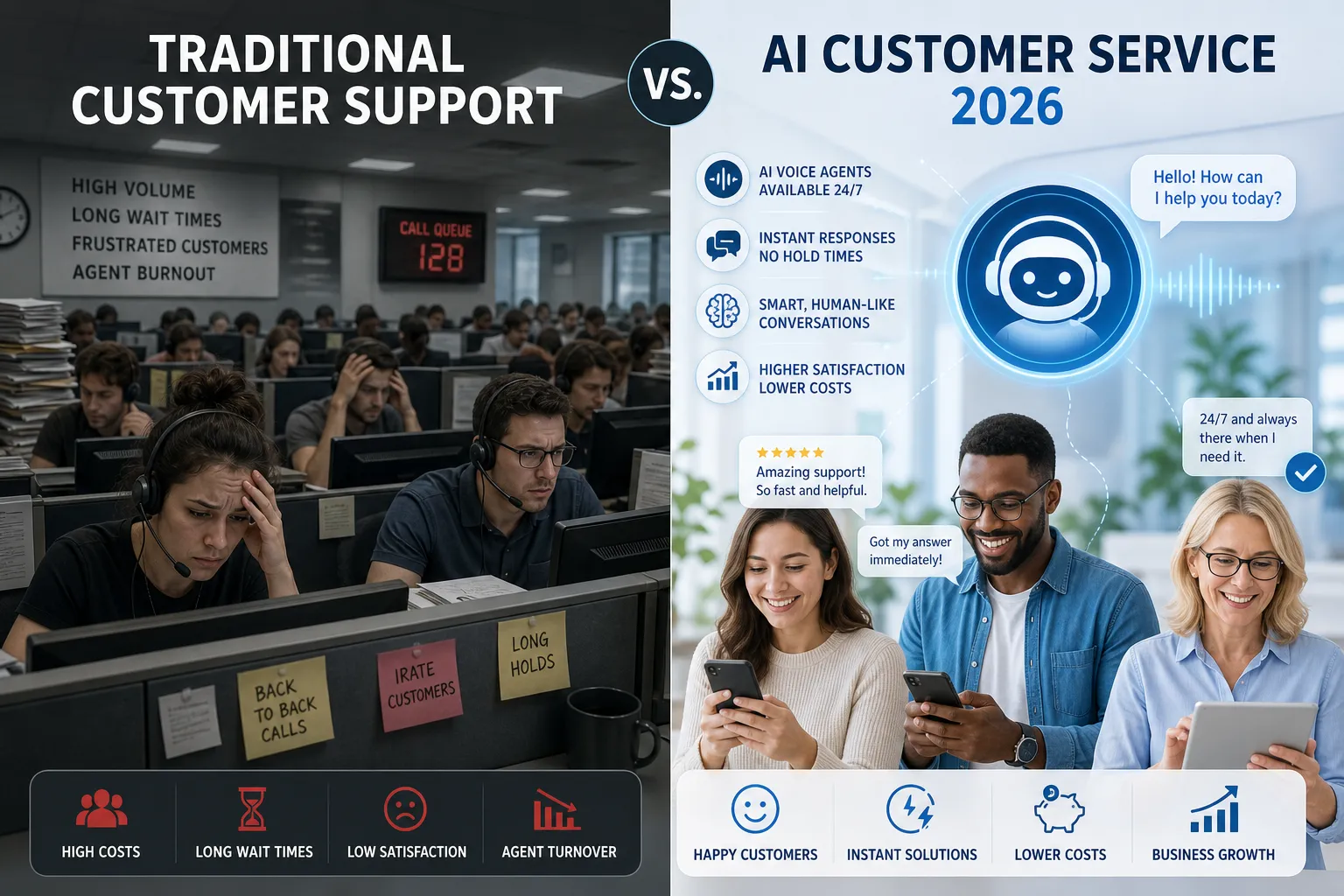
Traditional support still has an essential place, especially for emotionally sensitive, complex, or high-risk conversations. But for large volumes of repeatable interactions, AI customer support is simply better aligned with speed, consistency, and scale.
Where traditional support struggles
Traditional support teams commonly face:
long hold times during peaks
limited hours of operation
inconsistent knowledge across agents
high turnover and training costs
missed inbound opportunities after hours
fragmented systems between phone, CRM, and messaging
Where AI performs best
AI customer service performs especially well when the interaction is:
repetitive
rules-based
time-sensitive
multilingual
process-driven
dependent on fast retrieval of business information
Examples include order status calls, appointment booking, lead qualification, candidate pre-screening, account FAQs, payment reminders, and rescheduling requests.
The ideal 2026 model: AI first, human backed
The strongest model is not AI-only. It is AI-first with human support behind it.
That means AI handles the front line at scale, while human agents focus on edge cases, escalation, empathy, negotiation, or exception management. The handoff must be immediate and contextual. Trikon supports this with live human transfer and full context carryover, which is critical for maintaining a good customer experience.
What the Best AI Customer Service Systems Need to Do
Many ranking articles mention features, but they often treat all features as equal. In reality, a few capabilities matter much more than the rest.
1. Respond naturally in real time
Customers do not want a delayed or robotic experience. Voice AI needs sub-second latency to feel conversational, especially on phone calls where pauses break trust quickly.
Trikon’s sub-second response times are important here because speed directly affects perceived intelligence and call completion rates.
2. Answer using business-specific knowledge
Generic models are not enough. The best AI customer support tools ground answers in actual company content such as:
websites
help centers
PDF documents
onboarding materials
policy documents
product FAQs
This improves consistency and reduces hallucinations. It also makes the AI useful from day one.
3. Support inbound and outbound communication
A lot of tools handle only one side of the conversation. Businesses in 2026 need both.
Inbound use cases:
answering calls
handling FAQs
routing departments
booking appointments
troubleshooting basic issues
Outbound use cases:
lead follow-up
appointment reminders
payment reminders
reactivation campaigns
candidate screening
event confirmations
Trikon supports both inbound and outbound calling, which makes it useful beyond a narrow support function.
4. Escalate to humans without losing the thread
A bad handoff is worse than no automation at all. The AI should know when to transfer and what context to pass along.
The best systems send:
caller identity
reason for the call
extracted intent
relevant notes
prior actions taken
That lets the human continue the conversation instead of restarting it.
5. Integrate with the systems teams already use
AI becomes operationally valuable when it triggers work, not just talk. In 2026, businesses should expect integrations with:
CRM
calendars
WhatsApp
help desk tools
workflow automations
analytics dashboards
Trikon’s unified platform approach is valuable because it brings together voice AI, WhatsApp Business, and cloud phone functionality in one environment rather than forcing teams to manage separate stacks.
The Most Valuable Use Cases for AI Customer Service
Competitor content usually covers general support automation. The bigger content gap is showing how different business teams use the same technology differently.
Sales teams
Sales teams use AI voice agents to:
answer inbound lead calls immediately
qualify prospects using defined criteria
book meetings automatically
send WhatsApp follow-ups
update CRM records after each call
run outbound follow-up sequences
A missed inbound call can mean lost pipeline. AI closes that gap without adding headcount.
Customer support teams
Support teams use AI customer service to:
answer common questions 24/7
reduce queue volume
deflect repetitive calls
handle multilingual demand
route based on intent or urgency
escalate complex issues with context
This reduces average handling costs while improving availability.
Operations teams
Operations teams benefit from AI for:
appointment scheduling
confirmations and reminders
rescheduling
process updates
delivery or service status calls
internal routing and workflow execution
This is one of the clearest ROI areas because it automates process-heavy communication.
Recruiting teams
Recruiters and hiring teams increasingly use AI voice agents to:
screen candidates
confirm availability
answer job FAQs
schedule interviews
collect structured answers
reduce coordination overhead
This use case is still under-covered in competitor articles, despite being highly practical for growing companies.
What Buyers Should Look for When Evaluating a Platform
Choosing an AI customer support platform in 2026 should be treated like choosing operational infrastructure, not just software.
Evaluation checklist
Evaluation Area | What to Ask |
|---|---|
Speed to launch | How quickly can we go live with a working agent? |
Ease of setup | Can a business user configure it without developers? |
Voice quality | Does it sound natural and respond in real time? |
Knowledge grounding | Can it learn from our website, PDFs, docs, and FAQs? |
Language coverage | Does it support the languages we need now and later? |
Handoff quality | Can it transfer to a human with context? |
Workflow depth | Can it book meetings, update CRM, and trigger follow-ups? |
Channel support | Does it work across phone and messaging, not just one channel? |
Pricing clarity | Are there hidden setup fees, usage traps, or service layers? |
Scalability | Can we run unlimited agents as demand grows? |
This is where Trikon stands out for many practical buyers. It addresses the most common friction points directly: launch in under five minutes, no-code setup, no AI team required, transparent pricing, support for unlimited scale, and business-ready integrations.
What Competitors Often Miss
After reviewing the provided competitor content, several common themes appear repeatedly: cost reduction, 24/7 service, automation, chatbots, human handoff, and growing AI adoption. Those points are valid, but several content gaps remain.
1. They underplay voice
Many articles discuss AI in broad terms, but phone remains a critical business channel. Buyers are not only comparing chatbots anymore. They want AI that can handle real inbound and outbound calls naturally.
2. They focus on trends more than deployment
Readers do not just want to know that AI is growing. They want to know how fast they can launch, how much effort it takes, and whether they need an internal AI team.
3. They blur the line between “AI features” and “business outcomes”
A feature list alone does not help buyers. Outcomes matter more:
fewer missed calls
faster lead capture
better after-hours coverage
more appointments booked
reduced repetitive workloads
lower operating costs
4. They rarely explain knowledge grounding well
This is one of the most important quality levers. An AI system grounded in company documents and FAQs is fundamentally different from a generic assistant.
5. They overlook unified communication
Businesses increasingly want one platform for voice, messaging, business phone, follow-ups, and automation. Fragmented tools create fragmented service.
The 2026 Standard: Availability, Accuracy, and Action
Two capabilities now define whether AI customer service is truly production-ready:
It must answer correctly
It must do something useful next
That second point is where many tools still fall short. Modern business communication requires action after the conversation:
book a meeting
update a CRM record
send a WhatsApp summary
trigger a workflow
create a ticket
transfer to a human
log analytics
A voice agent that only “talks” is not enough. A platform like Trikon is more compelling because it turns voice into workflow execution.
"79% of Americans strongly prefer speaking with a human rather than an AI customer service agent." - SurveyMonkey
That may sound like a warning against AI, but the real takeaway is more nuanced: businesses need AI that knows its limits and can escalate gracefully. Customers do not reject automation outright; they reject bad automation.
"85% of CX leaders say customers leave brands when their issues remain unresolved after the first contact." - Zendesk CX Trends 2026
That is why fast resolution, accurate answers, and smooth escalation matter more than flashy demos.
Where AI Customer Support Delivers ROI Fastest
The fastest-return scenarios tend to share three traits:
high conversation volume
repetitive intents
time-sensitive follow-up
Best-fit scenarios
Scenario | Why ROI Happens Fast |
|---|---|
After-hours inbound call handling | Captures opportunities and resolves basic queries without staffing overnight |
Appointment booking and reminders | Cuts admin time and reduces no-shows |
FAQ deflection | Lowers support load immediately |
Lead qualification | Speeds routing and improves sales responsiveness |
Candidate screening | Reduces recruiter coordination time |
Multilingual support | Expands coverage without proportional hiring |
Outbound reactivation or follow-up calls | Increases conversion from dormant leads or customers |
For many SMBs and growing companies, the economics are especially attractive because they do not need a large technical team to start. With Trikon, businesses can launch quickly, test a targeted use case, and expand once performance is proven.
A Practical Rollout Plan for Businesses in 2026
Adoption does not need to be all at once. A better approach is staged deployment.
Phase 1: Start with one high-volume use case
Choose a workflow like:
inbound FAQs
booking calls
after-hours coverage
candidate screening
Phase 2: Train the agent on your business knowledge
Use:
website pages
documents
PDFs
FAQs
knowledge base content
Phase 3: Connect business systems
Add:
CRM
calendar
WhatsApp
phone numbers
automations
Phase 4: Define escalation rules
Specify when the AI should:
transfer to a live person
log a ticket
trigger follow-up
end the call politely
Phase 5: Measure and expand
Track:
call completion rate
resolution rate
booked appointments
handoff rate
average response speed
CSAT or quality review
cost per resolved interaction
This phased approach reduces risk while producing early wins.
Why Trikon Is Well Positioned for This Shift
Trikon aligns closely with what businesses actually need from AI customer service in 2026:
Fast deployment: launch a live AI voice agent in under 5 minutes
No-code setup: no AI team or engineering-heavy implementation required
Natural voice interaction: sub-second response times for real conversations
Multilingual capability: support across 30+ languages
Knowledge grounding: train from websites, documents, PDFs, and FAQs
Full coverage: handle both inbound and outbound calls
Smart escalation: transfer to live humans with full context
Connected workflows: integrate CRM, calendar, WhatsApp, and automations
24/7 scale: always-on availability with unlimited agents
Transparent pricing: no hidden fees or setup costs
That combination makes Trikon especially relevant for modern teams that want business-grade voice AI without custom development, long implementation cycles, or pricing uncertainty.
Final Verdict
AI customer service in 2026 is not about replacing every human interaction. It is about building a faster, more scalable front line for customer communication that can answer instantly, act intelligently, and escalate smoothly.
The businesses getting the most value are not chasing AI for its own sake. They are solving concrete communication bottlenecks: missed calls, slow response times, repetitive support load, under-qualified leads, scheduling overhead, and inconsistent after-hours coverage.
If that sounds familiar, the smartest next step is to start with a platform built for speed and practicality. Trikon makes that unusually simple. You can launch a live AI voice agent in minutes, train it on your own business content, connect it to your workflows, and start handling inbound and outbound conversations without code, without hidden fees, and without assembling an AI team first.
For teams that want to move from “AI research” to real operational impact, Trikon is one of the clearest ways to get there.
FAQ
What AI business to start in 2026?
One of the strongest opportunities is an AI-powered communication business that helps companies automate calls, lead qualification, scheduling, or support. In 2026, businesses want practical solutions with fast ROI, especially in voice AI, customer communication, and workflow automation.
Is AI replacing customer service?
Not completely. AI is reshaping customer service by taking over repetitive, high-volume interactions, while human teams focus on complex, sensitive, or high-value conversations. The best model is AI-first with seamless human handoff.
Which companies are getting into AI 2026?
Companies across sales, support, operations, recruiting, finance, education, and technology are adopting AI faster in 2026. The common pattern is high communication volume and a need for faster, always-on service without scaling headcount linearly.
What are the top AI trends in 2026?
The biggest trends are AI voice agents, knowledge-grounded responses, multilingual automation, unified communication platforms, and human-in-the-loop escalation. Businesses are prioritizing tools that deliver real-time conversations and trigger useful actions after each interaction.
What is hot in AI right now?
Production-ready conversational AI is especially hot right now, particularly for phone calls, support automation, scheduling, and lead qualification. Buyers are moving beyond basic chatbots and looking for AI that can connect to CRM, calendars, and messaging workflows.
Which 3 jobs will not survive AI?
Roles centered on highly repetitive, script-based communication are the most exposed, such as basic call screening, routine appointment confirmation, and simple FAQ handling. Even so, most teams will not disappear entirely; they will shift toward exception handling, relationship building, and oversight.