

AI Chatbot Platform: What Growing Teams Need
Growing teams do not need “just another bot.” They need an AI chatbot platform that helps them respond faster, convert more leads, reduce support pressure, and keep customer conversations organized as volume scales.
That matters even more if your business runs on messaging-first experiences:
D2C and e-commerce brands that want to recover carts, answer product questions, and drive repeat purchases
Service businesses that depend on bookings, reminders, and follow-ups
Support teams that need a centralized inbox, agent assignment, SLAs, and visibility
Agencies that want to launch WhatsApp automation quickly for clients, including white-label delivery
Most competitor content gets one thing right: modern chatbot software is no longer just an FAQ widget. But most of it also stops too early. They focus on generic chatbot features without explaining what growing teams actually need to operate, market, sell, and support customers in one place.
That is the real standard.
If you are comparing ai chatbot platforms, this guide will help you evaluate them through a practical lens: automation, handoff, analytics, channel fit, commerce readiness, and ease of deployment. And if WhatsApp is becoming a key customer channel for your business, you will also see why that changes what “best platform” really means.
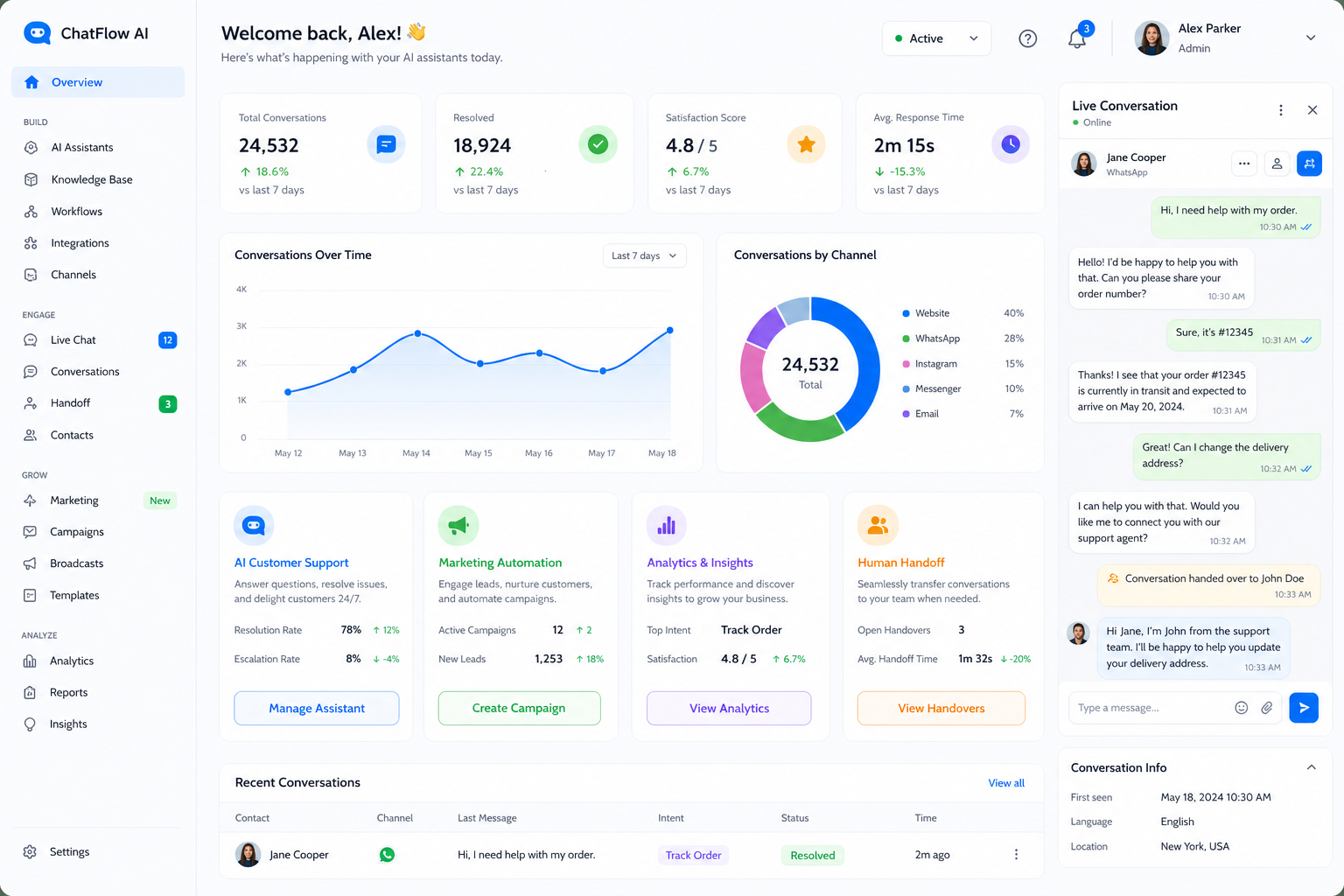
Why the Typical AI Chatbot Platform Comparison Falls Short
A lot of comparison articles cluster around the same themes:
AI-powered replies
FAQ automation
support deflection
integrations
pricing tiers
Useful? Yes. Sufficient? Not really.
The biggest content gap in most competitor pages is this: they treat chatbot platforms like isolated tools. In reality, growing businesses need a system that connects customer communication, operations, marketing, and sales.
An AI chatbot platform should not only answer questions. It should help your team:
capture and qualify leads
launch campaigns
route conversations to the right agent
recover abandoned carts
send booking reminders
track SLA performance
collect payments or confirm orders
maintain customer context across every interaction
That is why the real question is not “Which chatbot sounds smartest?”
It is “Which platform helps my team grow without adding operational chaos?”
What an AI Chatbot Platform Actually Is
An ai chatbot platform is software that enables businesses to automate conversations using AI, rules, or both. But the best platforms go beyond reply generation.
A modern platform combines:
Conversation automation
Shared inbox and agent collaboration
Channel management
Customer data and history
Campaign tools
Analytics and reporting
Operational workflows
Human handoff
In other words, the platform should support the full customer journey, not just a narrow support use case.
Chatbot vs Platform: The Difference That Matters
Capability | Basic Chatbot Tool | Full AI Chatbot Platform |
|---|---|---|
FAQ answers | Yes | Yes |
AI or rule-based automation | Sometimes | Yes |
Human handoff | Limited | Yes |
Shared team inbox | Rare | Yes |
Customer history/context | Limited | Yes |
Campaigns and segmentation | Usually no | Yes |
Booking and operations workflows | Usually no | Yes |
Commerce features | Rare | Yes |
SLA tracking and assignment | Rare | Yes |
Multi-team scalability | Weak | Strong |
For growing teams, this distinction matters a lot. A lightweight bot may seem cheaper at first, but if it cannot support your workflows, you end up stitching together multiple tools, increasing costs and slowing execution.
Why Messaging-First Platforms Are Winning
Customer expectations have changed. People want quick, convenient communication on channels they already use every day.
"73.3% of consumers favor messaging over traditional channels like email or phone calls." - Kantar via WhatsApp Business
For many businesses, especially in e-commerce and services, WhatsApp is no longer a side channel. It is becoming a primary one.
"68% of users consider WhatsApp the most convenient way to connect with brands." - YCloud
That changes platform selection. If customers already prefer messaging, the best AI chatbot platform is not the one with the most features on paper. It is the one that helps you execute the best customer experience inside that messaging environment.
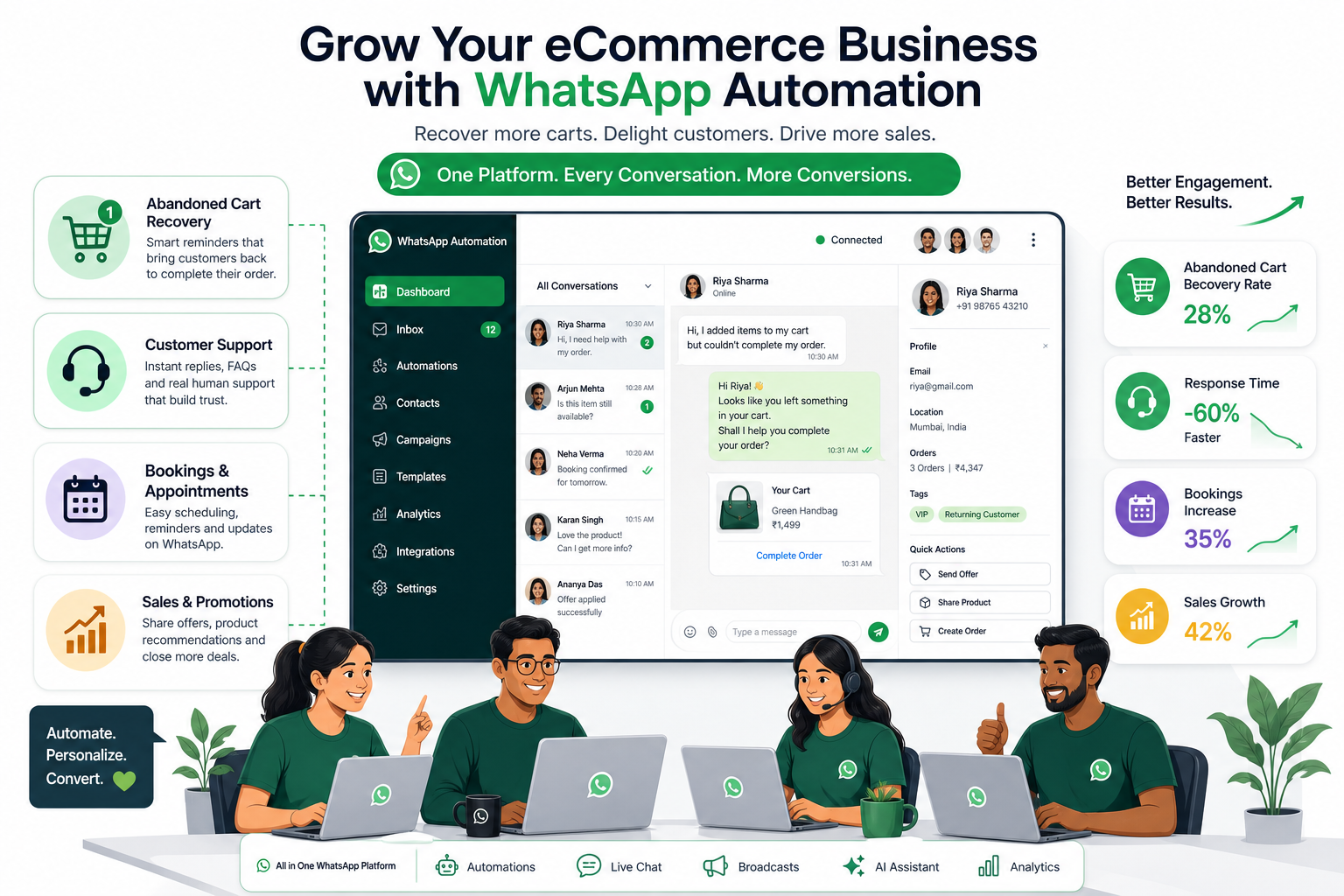
The Core Features Growing Teams Should Prioritize
1. No-Code Automation
If every workflow requires developers, momentum dies fast.
Growing businesses need:
drag-and-drop bot builders
keyword-based triggers
AI-triggered automations
prebuilt templates
fast editing and deployment
The best platforms let marketers, support managers, and operations teams launch flows without depending on engineering for every change.
This is especially important for:
product launch campaigns
support triage flows
lead qualification
seasonal offers
booking reminders
abandoned cart recovery
2. Human Handoff Without Friction
Pure automation is not the goal. Better customer experience is.
Great AI chatbot platforms use a hybrid model:
automate repetitive queries
escalate complex cases to humans
preserve full context during transfer
Without this, customers repeat themselves, agents lose time, and CSAT drops.
A strong handoff setup should include:
routing by team or skill
internal notes
conversation ownership
SLA timers
full conversation history
3. Shared Team Inbox
As teams grow, scattered messages become expensive. One person replying from a phone is not a scalable system.
A proper shared inbox should provide:
agent assignment
collision detection
tags and statuses
SLA visibility
conversation history
customer profile and notes
This is where a platform starts becoming operationally valuable, not just conversationally clever.
4. Omnichannel or Channel-Deep Focus
Some businesses need broad omnichannel coverage. Others need one channel done extremely well.
A useful rule:
choose omnichannel if you manage fragmented inbound support across multiple surfaces
choose channel-deep if one channel, such as WhatsApp, drives the majority of engagement and revenue
For many modern teams, especially in high-engagement markets, being strong in WhatsApp matters more than being mediocre across five channels.
5. Analytics That Connect to Outcomes
Chatbot analytics should go beyond “number of messages sent.”
You want visibility into:
response time
resolution rate
SLA compliance
handoff rate
campaign conversion
abandoned cart recovery
booking completion
order or revenue impact
If the platform cannot show business outcomes, it is harder to justify and harder to improve.
6. Marketing Automation Built In
This is another major gap in most competitor content. They talk about support bots, but fast-growing teams also need revenue use cases.
That includes:
broadcasts
audience segmentation
drip flows
retargeting
cart recovery
click-to-WhatsApp campaigns
post-purchase journeys
win-back flows
A chatbot platform becomes far more valuable when it supports both service and growth.
7. Operational Workflows Inside Chat
For service businesses especially, automation should not stop at “Thanks, we received your message.”
Your platform should support:
appointments
reminders
confirmations
reservations
payments
follow-ups
cancellations or rescheduling
The more work customers can complete inside chat, the lower the friction and the higher the conversion rate.
8. Commerce Readiness
If you sell products, your AI chatbot platform should help customers move from question to purchase inside the same thread.
Look for:
catalog support
product browsing
cart creation
order confirmation
website sync
upsell/cross-sell opportunities
This is where conversational commerce becomes practical, not theoretical.
9. Fast Setup and Low Engineering Dependency
A platform can be powerful and still unusable if setup is too heavy.
Growing teams should prioritize:
fast onboarding
clear templates
no-code configuration
accessible automation controls
reliable support
minimal implementation overhead
That speed to launch matters more than extra complexity you may never use.
10. Agency and Multi-Client Readiness
If you are an agency, or a team managing multiple business units, the platform should support:
multi-account management
repeatable deployment
easy handoff to clients
white-label potential
scalable team workflows
Most comparison posts barely mention this. But for agencies and service providers, this can be a deciding factor.
What Competitor Articles Usually Miss
After reviewing common themes in top-ranking chatbot content, here are the biggest content gaps:
They underplay messaging channel strategy
Many articles discuss AI in generic terms, but do not explain that channel choice shapes platform requirements. WhatsApp-led customer journeys need different tooling than website chat alone.
They treat support and marketing as separate systems
Growing businesses increasingly want one platform for:
inbound support
outbound campaigns
nurture flows
lead qualification
post-sale service
They overlook commerce and operations
Appointments, reminders, reservations, and payments inside chat are not edge cases anymore. They are central workflows for many businesses.
They focus on AI quality but ignore team workflow
Even a good bot fails if agents cannot collaborate, assign, track, and respond with context.
They mention integrations but not execution speed
For growing teams, time-to-value matters. A powerful system that takes months to launch is often a poor fit.
How to Evaluate AI Chatbot Platforms for Your Team
Use the framework below to compare options more intelligently.
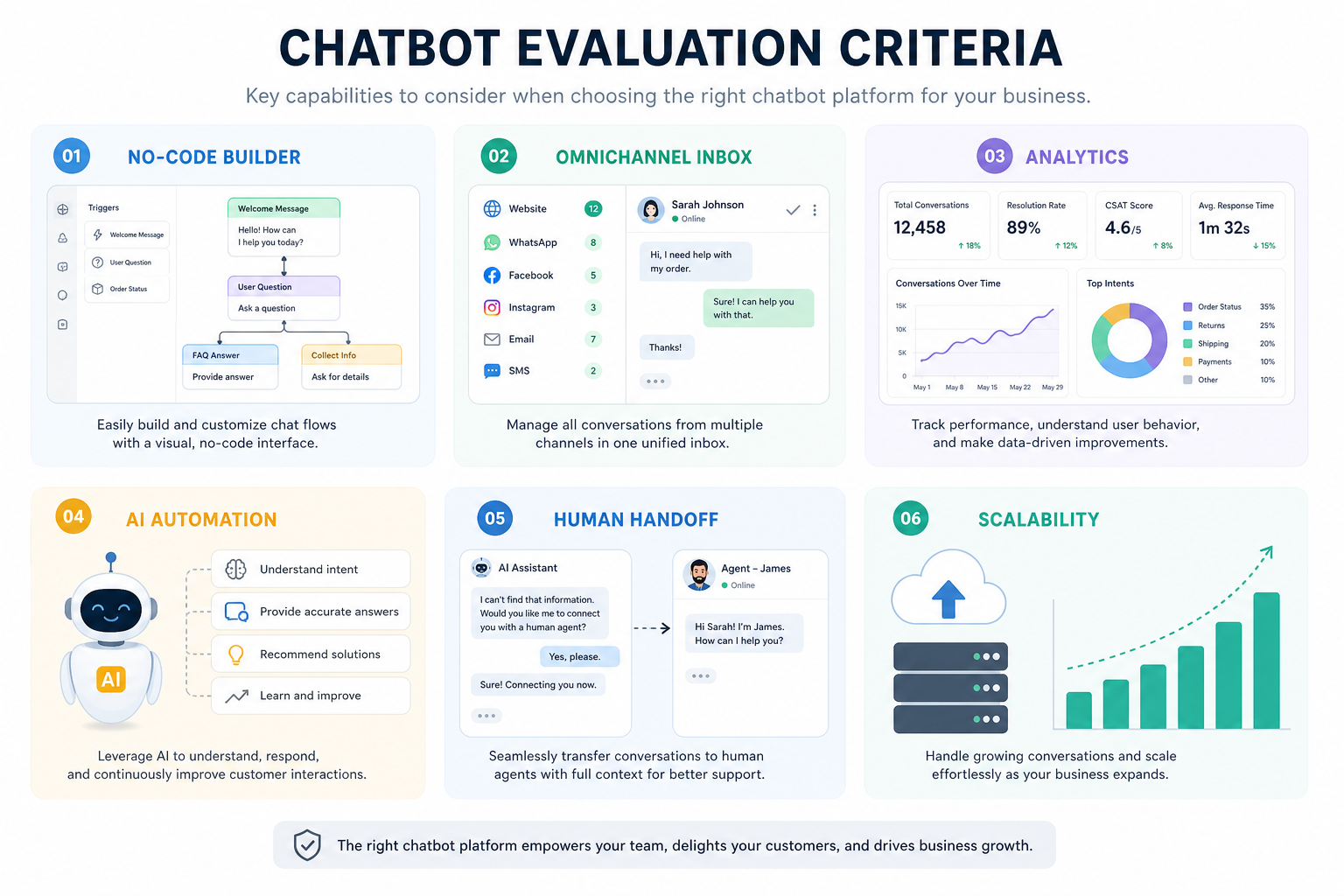
Step 1: Define the Primary Job
Ask: what is the platform mainly supposed to do in the next 6 to 12 months?
Primary Goal | What You Need Most |
|---|---|
Reduce support load | FAQ automation, shared inbox, SLAs, handoff |
Generate more leads | qualification flows, retargeting, agent alerts |
Grow e-commerce revenue | cart recovery, catalog, segmentation, campaigns |
Manage bookings | appointment workflows, reminders, confirmations |
Serve enterprise support teams | centralized inbox, permissions, routing, analytics |
Offer client services as an agency | multi-account control, scalable deployment, white-label readiness |
Step 2: Map the Customer Journey
A platform should support more than one moment. Look for fit across the full journey:
discovery
inquiry
qualification
conversion
fulfillment
support
re-engagement
If the platform only helps at one stage, you may outgrow it quickly.
Step 3: Test the Handoff Experience
Do not just test the bot. Test what happens when the bot cannot solve the issue.
Ask:
does the agent receive full context?
can the conversation be reassigned easily?
are SLA timers visible?
does the customer experience feel seamless?
Step 4: Check Campaign Readiness
If growth is a priority, check:
segmentation options
broadcast tools
drip journeys
automation triggers
retargeting ability
performance reporting
Step 5: Evaluate Operational Depth
For service and commerce teams, this is crucial:
can customers book or order inside chat?
can reminders be automated?
can you sync with your website or store?
can payment or reservation flows be supported?
Step 6: Measure Setup Burden
Ask the vendor:
how long does launch usually take?
how much engineering is required?
what can non-technical users manage themselves?
how quickly can campaigns and automations go live?
What Different Types of Teams Need From an AI Chatbot Platform
D2C and E-commerce Brands
These teams need more than customer support.
Their ideal platform should support:
product discovery
FAQ automation
abandoned cart recovery
order updates
promotional broadcasts
upsell flows
conversational checkout support
For them, a chatbot platform should act as both service layer and sales engine.
Service Businesses
Clinics, salons, educational providers, consultancies, hospitality teams, and local service brands often need:
appointment booking
reminders
rescheduling
lead qualification
payment prompts
follow-up automation
The best-fit platform reduces missed appointments and speeds up conversion.
Enterprise Support Teams
These teams need:
a centralized support inbox
agent assignment
SLA tracking
internal collaboration
escalation management
customer history visibility
reporting for managers
Here, operational control matters just as much as AI quality.
Agencies
Agencies want:
minimal setup
repeatable deployment
no-code workflows
campaign agility
scalable client management
white-label options
A platform that is “agency-ready” creates a much stronger service business than one that only works for single-brand use cases.
Where Trikon Fits in the Modern AI Chatbot Platform Landscape
If your business wants to make WhatsApp a serious customer channel, Trikon stands out because it is not positioned as a narrow bot tool. It is designed as an all-in-one WhatsApp platform for support, automation, marketing, bookings, and commerce.

Why That Matters
Many platforms require businesses to combine multiple tools:
one for inbox
one for chatbot flows
one for campaigns
one for bookings
one for store/catalog experiences
Trikon reduces that complexity by bringing the key workflows together in one environment.
Trikon’s Core Strengths
Official WhatsApp Business API Partner
That gives businesses more confidence around reliability, compliance, and long-term channel stability.
Shared Support Inbox
Teams can manage conversations with:
assignment
SLA tracking
full customer context
organized collaboration
No-Code Automation
Teams can launch:
rule-based flows
keyword automations
AI-triggered interactions without heavy engineering support.
Hybrid Automation + Human Handoff
This is one of the most practical strengths. Repetitive questions can be handled automatically, while complex cases move to live agents with context intact.
Marketing Automation for Revenue
Trikon supports:
broadcasts
segmentation
drip flows
retargeting
abandoned cart recovery
That makes it useful beyond support.
Bookings and Operations
Businesses can run:
appointments
reminders
reservations
payments directly in WhatsApp.
WhatsApp Commerce
With catalog, cart, orders, and website sync, teams can sell where conversations are already happening.
Minimal Setup
That makes it attractive for businesses without large technical teams.
Agency-Ready Scalability
Trikon also aligns well with agencies that need scalable WhatsApp automation and white-label-friendly service delivery.
How Trikon Compares to More General Chatbot Platforms
Some brands compare WhatsApp-focused platforms against broad support or website-chat tools. That can be misleading if your real strategy is messaging-led growth.
Here is a practical comparison:
Platform Type | Best For | Potential Limitation |
|---|---|---|
General website chatbot | Basic web FAQ and lead capture | Weak for WhatsApp-native workflows |
Support-first helpdesk AI | Ticket deflection and support ops | Often weaker on campaigns, commerce, bookings |
Sales chat tool | Website lead conversion | Usually limited for post-sale and operations |
WhatsApp-first platform like Trikon | Support, marketing, automation, bookings, commerce in WhatsApp | Best fit when WhatsApp is central to your CX strategy |
Screenshots of Other Commonly Compared Platforms
Intercom
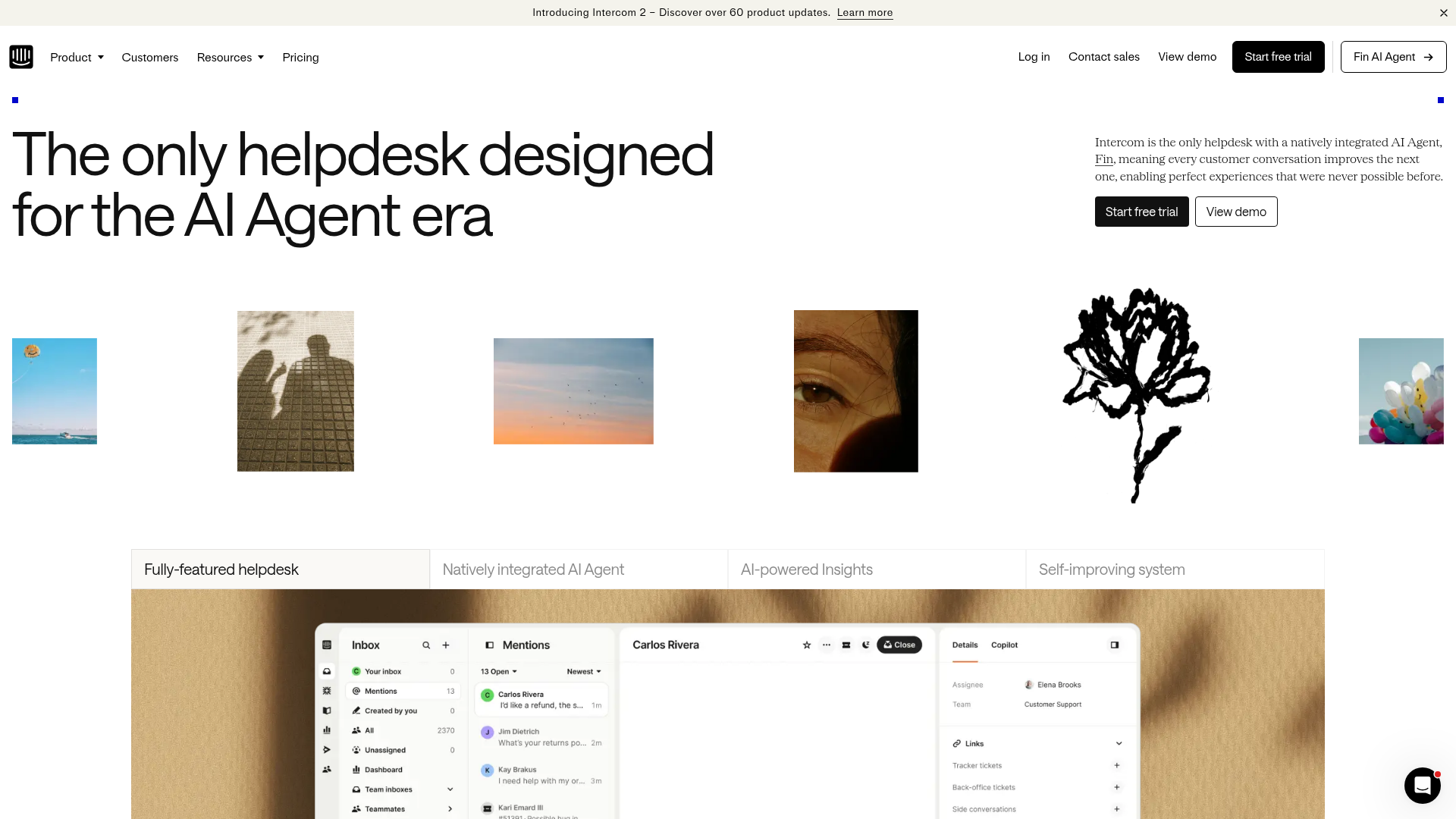
Intercom is strong in support and customer messaging infrastructure, especially for web-based support teams. It is often a good option for help-center-led workflows, but teams prioritizing WhatsApp commerce, bookings, and marketing may need more specialized functionality.
Zendesk

Zendesk is a mature support platform with strong ticketing and enterprise service features. It is highly relevant for support-heavy operations, but businesses seeking a more unified WhatsApp-led growth and commerce layer may find it too support-centric.
Drift
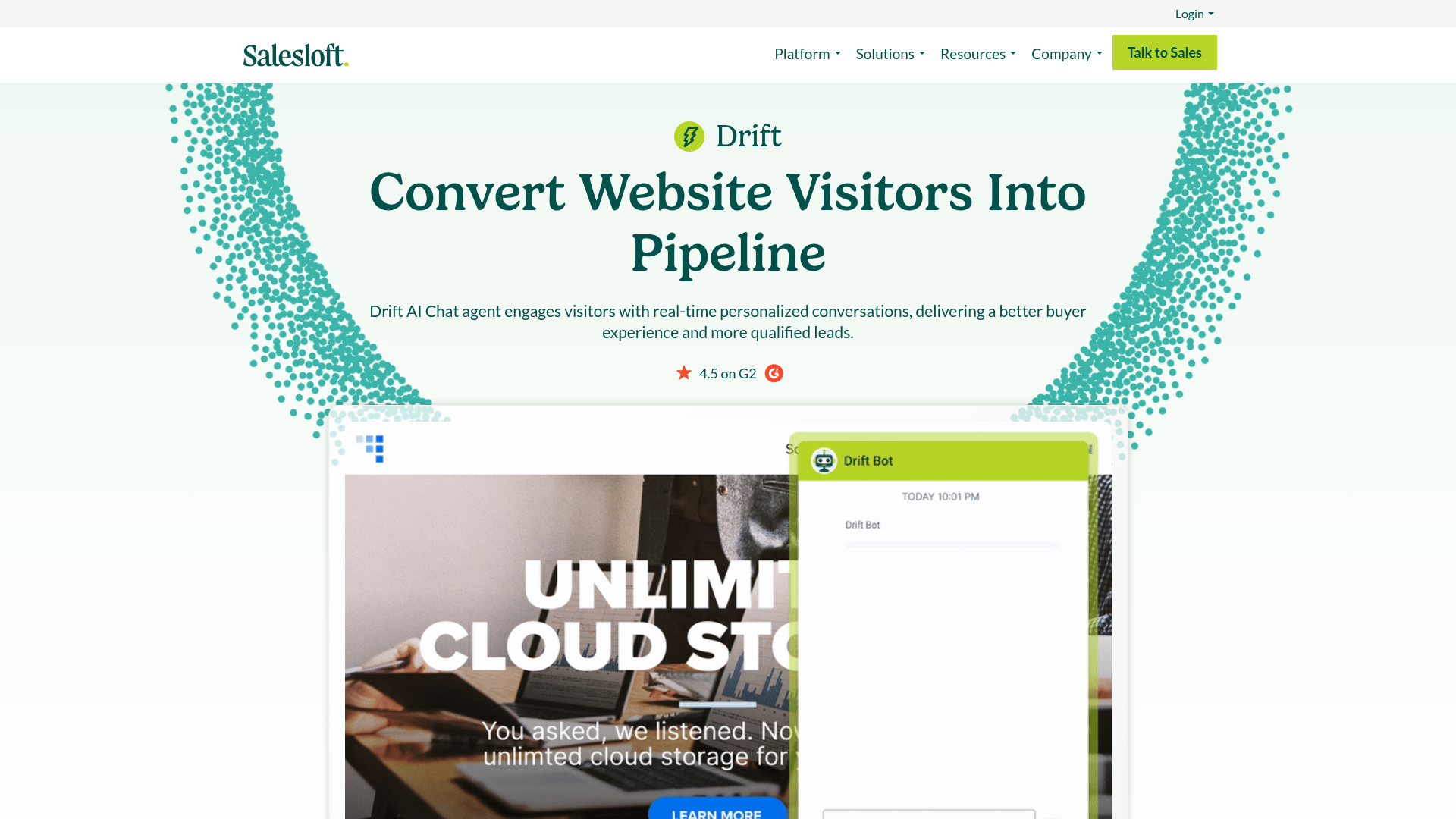
Drift is known for conversational marketing and website lead engagement. It is useful for B2B website chat use cases, but it is less aligned with WhatsApp-based support, operational workflows, and conversational commerce.
The Best AI Chatbot Platform Is the One That Matches Your Growth Model
There is no universal winner for every business.
The best ai chatbot platforms are the ones aligned to:
your main customer channel
your internal team structure
your speed of execution
your revenue model
your service complexity
Here is a simple way to think about it:
Choose a general chatbot platform if:
your primary use case is website chat
you mainly want FAQ automation
your support workflows are web-first
commerce and bookings are not major priorities
Choose a messaging-first platform like Trikon if:
WhatsApp is a core customer channel
you want support and marketing in one place
you need automation plus human handoff
you run bookings, reminders, or operational workflows
you want to sell directly inside chat
you need fast setup without large engineering resources
A Practical Buyer Checklist
Before choosing an AI chatbot platform, ask these questions:
Can non-technical teams build and update workflows?
Does it support both AI and rule-based automation?
Is human handoff seamless and context-rich?
Can our team collaborate in a shared inbox?
Does it track agent performance and SLAs?
Can it support campaigns, segmentation, and retargeting?
Can customers book, pay, or order inside chat?
Is it strong on our primary customer channel?
Will we need multiple tools to do what we need?
How quickly can we launch and improve?
If the answer to several of these is “no,” the platform may not scale with your team.
Final Verdict
An ai chatbot platform should do more than automate replies. It should help your team deliver better customer experiences, streamline operations, and create measurable business growth.
For growing businesses, the winning formula is usually:
no-code automation
24/7 responsiveness
human handoff
shared inbox collaboration
clear analytics
channel fit
commerce and operational depth
fast implementation
That is why platforms built around real-world messaging workflows are gaining ground. And if WhatsApp is central to your customer journey, Trikon is especially compelling.
As an official WhatsApp Business API partner, Trikon gives teams a simple but powerful way to unify support, marketing, bots, bookings, and commerce in one place. Instead of patching together separate tools, you can launch faster, automate repetitive work, keep agents in control when needed, and turn WhatsApp into a true business channel.
If your team wants to grow without multiplying complexity, Trikon is the smarter place to start.
FAQ
What are the requirements for a chatbot AI?
A strong chatbot AI needs quality conversation logic, access to relevant customer context, clear automation rules, and seamless human handoff. For growing teams, the platform should also include a shared inbox, analytics, and no-code workflow building so it can scale beyond simple FAQs.
How do I add an AI chatbot to Teams?
You typically add an AI chatbot to a team environment by choosing a platform with shared inbox access, agent roles, routing, and collaboration tools. If your business runs on WhatsApp, a platform like Trikon makes this easier by centralizing customer conversations, assignment, SLA tracking, and automation in one workspace.
What are the 5 current trends in AI?
Five major trends are generative AI for conversations, no-code automation, hybrid bot-plus-human support, conversational commerce, and AI-driven customer engagement inside messaging apps. Businesses are also increasingly looking for platforms that combine support, marketing, and operations instead of treating them as separate systems.
What are the technical tools required for AI teams?
AI teams usually need automation builders, data and analytics tools, channel integrations, customer context systems, and human handoff workflows. For many growing businesses, the best solution is an all-in-one platform that reduces engineering dependency and lets non-technical teams launch quickly.
What are the 4 types of AI?
The commonly cited four types are reactive machines, limited memory AI, theory of mind, and self-aware AI. In business chatbot platforms today, most practical systems use limited-memory approaches combined with rule-based logic and generative AI to handle support, sales, and workflow automation.
Why do 85% of AI projects fail?
Many AI projects fail because they lack clear use cases, strong workflow design, team adoption, data context, and measurable business outcomes. That is why growing teams should choose an AI chatbot platform that is easy to launch, aligned to the main customer channel, and built to support real operations, not just demos.