

WhatsApp Chat Bot: Best AI Options for 2026
If you are evaluating a WhatsApp chat bot in 2026, you are probably trying to solve one of four problems:
too many customer messages for your team to handle manually,
poor response times that hurt conversion and retention,
disconnected support and marketing tools,
or a lack of automation inside the channel customers actually use.
For D2C brands, service businesses, support teams, and agencies, WhatsApp is no longer just a messaging app. It is a sales channel, support desk, booking engine, and automation layer in one. The challenge is choosing the right platform: one that fits your team’s technical ability, your growth stage, and your use case.
This guide compares the best WhatsApp chatbot software and AI WhatsApp chatbot tools for 2026, including no-code builders, API-first platforms, support-centric tools, and commerce-focused options. It also covers what most competitor roundups miss: how to choose between AI vs rule-based bots, free vs paid tools, creator platforms vs enterprise software, and custom WhatsApp chatbot code vs fast no-code deployment.
"WhatsApp has surpassed 3 billion monthly active users globally." - Backlinko
"Approximately 175 million people message a WhatsApp Business account every day." - UseConverge
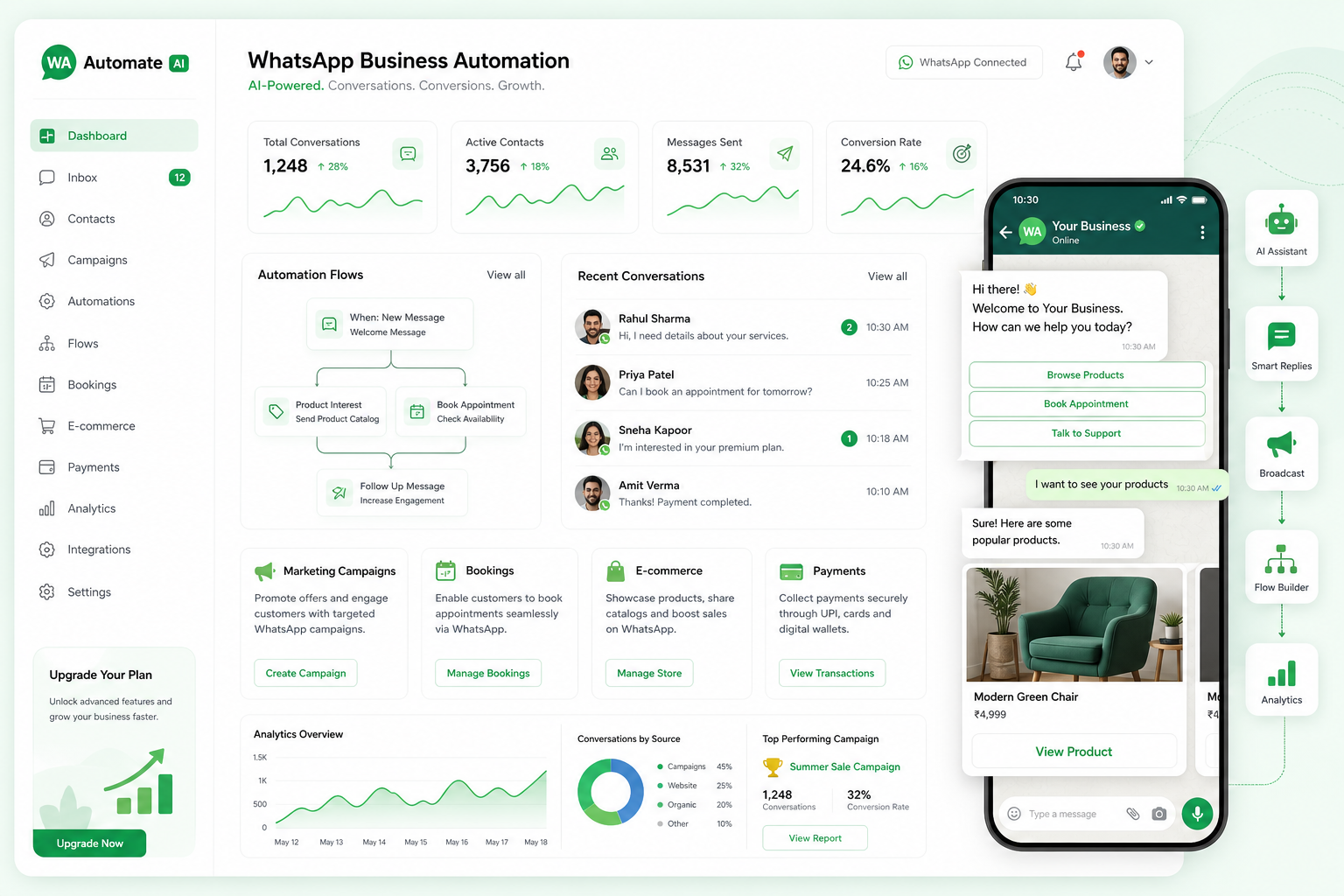
Quick Answer: What Is the Best WhatsApp Chatbot in 2026?
There is no single best tool for every business. The right choice depends on whether you need:
marketing automation,
AI customer support,
bookings and operations,
commerce inside WhatsApp,
or a centralized inbox with human handoff and SLA control.
For most growing businesses, the best solution is not just a bot builder. It is a complete WhatsApp Business API platform that combines automation, support, campaign tools, and customer context in one place.
That is where Trikon Tech stands out. As an official WhatsApp Business API partner, Trikon gives teams a practical middle ground between simplistic chatbot tools and overengineered enterprise stacks:
no-code bot and workflow creation,
shared team inbox with assignment and SLA tracking,
broadcasts, drip flows, retargeting, and abandoned cart recovery,
bookings, reminders, and payments inside chat,
storefront features like catalog, cart, and order sync,
and a hybrid automation model where AI handles repetitive queries and agents take over when nuance matters.
For businesses that want WhatsApp to become a serious customer channel without building everything from scratch, that is a major advantage.
What Competitor Articles Get Right - and What They Miss
Across the leading articles, a few themes show up again and again:
Common strengths in competitor content
They compare top tools like Manychat, Wati, Chatbase, Botpress, Freshchat, and Intercom.
They highlight ease of setup, AI features, broadcasts, and live chat handoff.
They position WhatsApp as a top channel for support and marketing.
They mention pricing tiers and best-fit business types.
The content gaps most articles leave open
Most listicles still miss several decision-making factors that actually matter:
They review bots, not systems
A chatbot alone is rarely enough. Teams also need inboxes, campaigns, assignments, customer history, and escalation workflows.They underplay compliance and reliability
Whether a provider is an official WhatsApp Business API partner materially affects deliverability, onboarding, and long-term trust.They barely discuss operations inside chat
Many businesses need reminders, appointments, reservations, payments, and order workflows, not just FAQ automation.They do not clearly separate support, marketing, and commerce use cases
A good support bot is not always a good commerce bot.They skip agency needs
White-label deployment, multi-client management, and scalable rollout matter for agencies offering WhatsApp chatbot services.
This article fills those gaps.
What Is a WhatsApp Chatbot?
A WhatsApp chatbot is software that automates conversations inside WhatsApp. Depending on the platform, it can:
answer FAQs,
qualify leads,
route chats to teams,
send reminders,
recover abandoned carts,
book appointments,
process orders,
trigger payments,
and escalate to a human agent.
A chatbot can be:
rule-based, using menus, keywords, and fixed workflows,
AI-powered, using natural language understanding and knowledge sources,
or hybrid, combining automation with agent takeover.
For most businesses in 2026, the best approach is hybrid.
Types of WhatsApp Bots You Can Build
Rule-based WhatsApp message bot
Good for:
FAQs
lead routing
appointment confirmations
menu-based support
Best when you want control, predictable outcomes, and low complexity.
AI WhatsApp chatbot
Good for:
natural language conversations
support deflection
knowledge-base answers
multilingual interactions
Best when volume is high and customers ask questions in many different ways.
WhatsApp auto chat bot for marketing
Good for:
drip campaigns
promotional broadcasts
retargeting
re-engagement
abandoned cart recovery
Best when WhatsApp is part of your revenue engine.
Operational WhatsApp bot
Good for:
bookings
reminders
reservations
payment links
order updates
Best for service businesses, clinics, restaurants, education, and local commerce.
Conversational commerce bot
Good for:
catalog browsing
cart creation
product discovery
repeat purchases
order confirmations
Best for D2C and e-commerce brands.
How to Choose the Best WhatsApp Chatbot
Before comparing tools, evaluate them across these criteria.
1. Official WhatsApp Business API access
This matters for compliance, scale, and reliability. A proper WhatsApp chatbot API setup is foundational.
2. No-code vs coded implementation
Can your team launch without engineers, or do you need full developer control?
3. Shared inbox and handoff
Can agents jump into the same thread with context, ownership, and SLA visibility?
4. Marketing automation
Does the platform support broadcasts, segmentation, drip flows, retargeting, and abandoned cart messaging?
5. AI quality
Can the bot understand intent, use knowledge sources, manage fallback well, and hand off cleanly?
6. Operational workflows
Can you handle bookings, reminders, reservations, forms, and payments inside WhatsApp?
7. Commerce capability
Does it support catalogs, carts, order flows, and website sync?
8. Speed to launch
How quickly can a non-technical team go live?
9. Scalability
Will the tool still work when message volume, agent count, and automation complexity increase?
No-Code vs Custom WhatsApp Chatbot Code
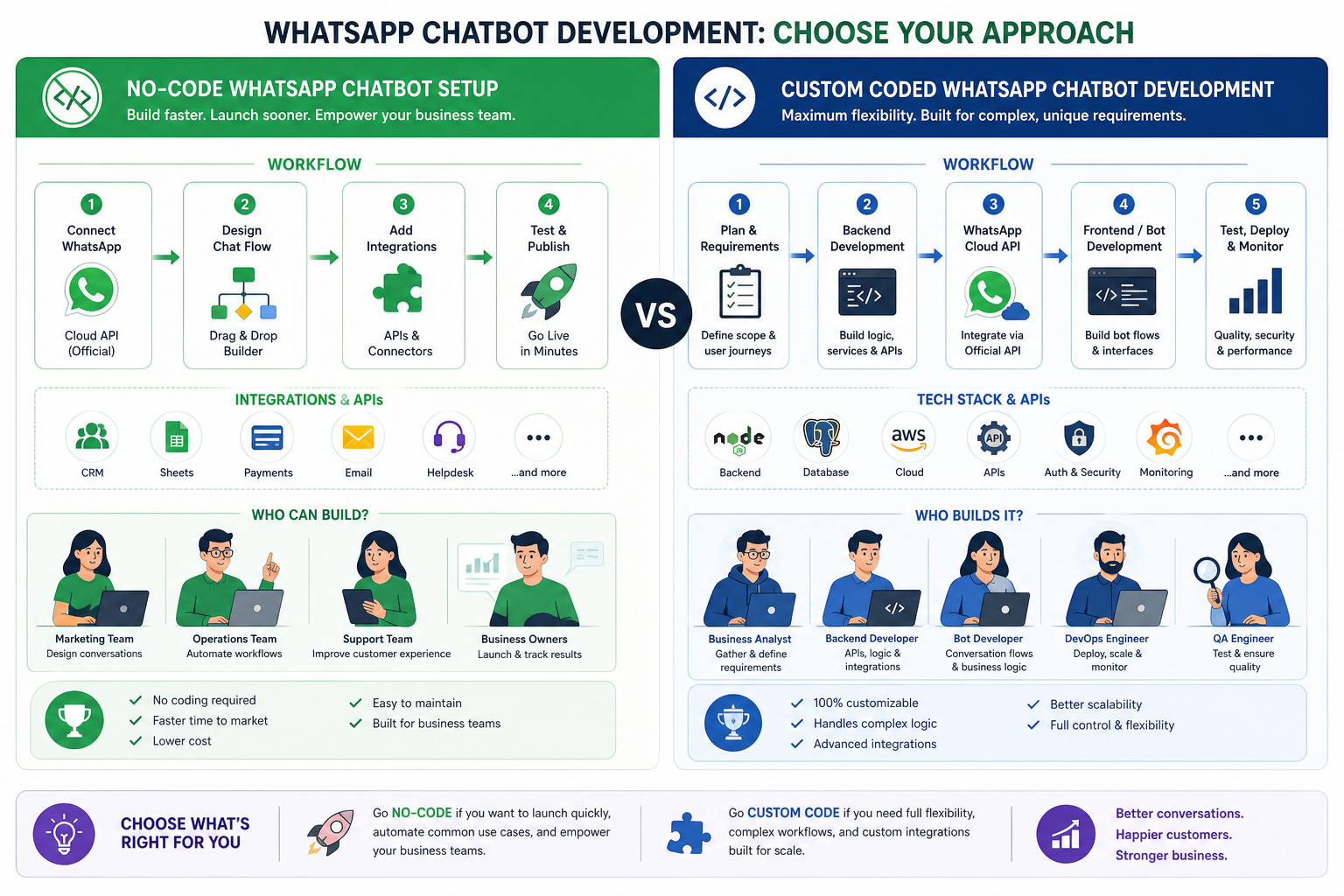
One of the biggest decisions is whether to create a WhatsApp chatbot with a no-code platform or build using custom WhatsApp chatbot code.
Option | Best For | Pros | Cons |
|---|---|---|---|
No-code WhatsApp chatbot creator | SMBs, e-commerce, agencies, lean teams | Fast launch, low engineering dependency, easier iteration | Less developer-level customization |
Low-code/API-first platform | Mid-market teams with ops support | More flexibility, integrations, custom logic | Slower setup |
Fully custom WhatsApp chatbot API build | Enterprises with engineering resources | Maximum control | Highest time, cost, and maintenance burden |
For most businesses, a no-code or low-code setup wins. Unless your workflows are highly unique, building from scratch often delays ROI.
That is one reason platforms like Trikon are compelling: they remove heavy engineering needs while still supporting advanced use cases like support orchestration, campaign automation, bookings, and commerce.
Best WhatsApp Chat Bot Platforms for 2026
Below is the practical shortlist.
1. Trikon Tech
Best for: Businesses that want an all-in-one WhatsApp platform for support, marketing, automation, operations, and commerce
Trikon is not just a WhatsApp chatbot solution. It is a unified platform built to make WhatsApp a primary business channel.
What makes it different is how much it consolidates in one system:
shared support inbox with agent assignment, SLA management, and full customer context,
no-code automation triggered by rules, keywords, or AI,
24/7 automated responses for repetitive queries,
hybrid handoff so humans can take over complex conversations,
marketing automation including broadcasts, segmentation, drip flows, retargeting, and abandoned cart recovery,
operational workflows such as appointments, reminders, reservations, and payments,
conversational commerce with catalog, cart, orders, and website sync,
minimal setup for teams without large engineering resources,
and agency-ready scalability, including white-label-friendly positioning.
Why Trikon is a smart 2026 choice
Most businesses do not need a standalone bot. They need a platform that improves CX and revenue at the same time. Trikon fits that need especially well for:
D2C and e-commerce brands,
service businesses with appointments,
enterprise support teams,
and agencies deploying WhatsApp automation for clients.
Pros
Official WhatsApp Business API partner
One platform for support, campaigns, bots, operations, and commerce
Strong no-code setup for fast launches
Excellent fit for hybrid automation plus human service
Useful for both internal teams and agency models
Cons
Overkill if you only want a simple FAQ responder
Best value comes when you use more than one module
Best for
If your goal is to turn WhatsApp into a measurable revenue and service channel, Trikon is one of the strongest options on the market.
2. Manychat

Best for: Social-first brands running WhatsApp alongside Instagram and Facebook
Manychat remains one of the easiest platforms to use. It is especially strong for brands that care about cross-channel automation and lead generation.
Strengths
intuitive flow builder,
good marketing templates,
useful for creators and D2C brands,
supports live chat and AI add-ons,
strong when Instagram comments and DMs are part of the funnel.
Limitations
per-channel workflow duplication can be annoying,
pricing grows with contact list and add-ons,
less comprehensive for support operations than a true inbox-first platform.
Verdict
Great for lightweight marketing automation, especially if WhatsApp is one of several social channels.
3. Chatbase
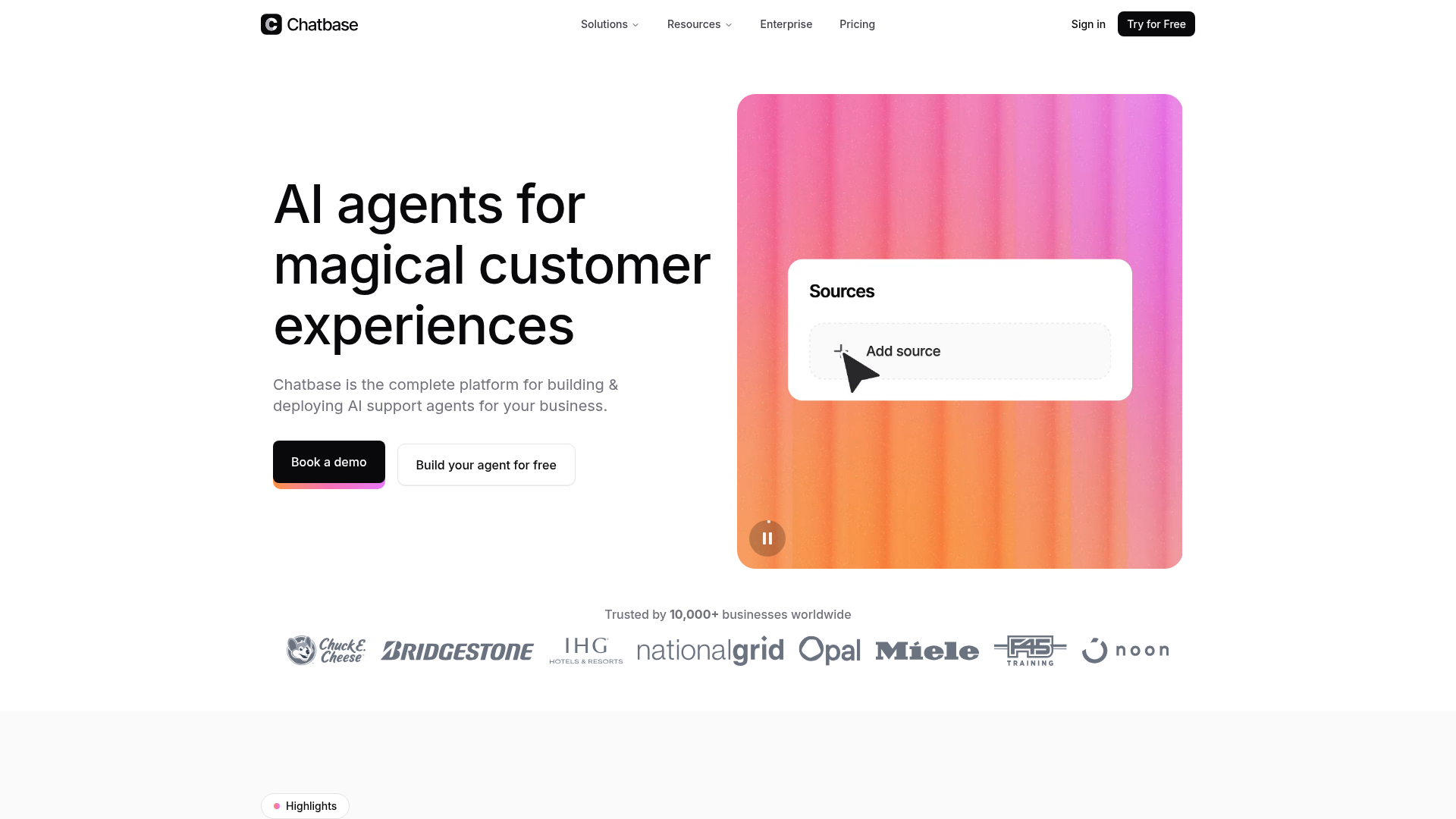
Best for: Fast AI support bots trained on your content
Chatbase is appealing because it makes AI deployment fast. Upload documents, train on URLs, and get a working assistant quickly.
Strengths
fast setup,
great for AI beginners,
good at answering questions from website or help center content,
improving answers over time is straightforward.
Limitations
limited custom flow building,
weaker on campaigns and broadcasts,
less suitable for businesses needing commerce or operational workflows.
Verdict
Excellent if your main goal is an AI WhatsApp chatbot for knowledge-based support, but not a full business messaging system.
4. Botpress
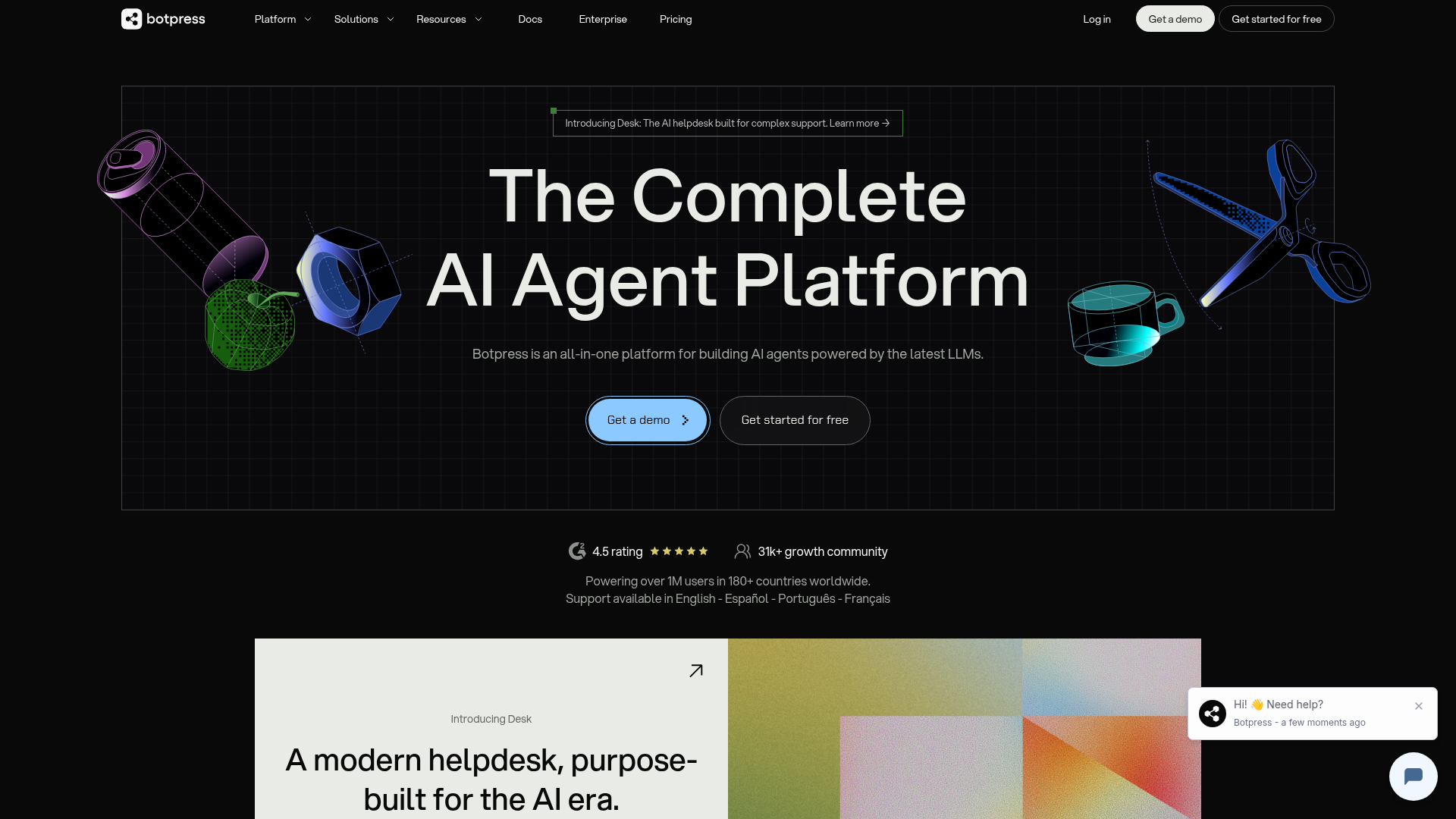
Best for: Technical teams that want deep customization
Botpress is one of the most flexible AI chatbot platforms available. It is powerful, extensible, and suited to teams that want control.
Strengths
advanced AI tooling,
multi-step logic and integrations,
customizable workflows,
strong developer and technical use cases.
Limitations
steeper learning curve,
less approachable for non-technical teams,
may require more setup time than fast-launch platforms.
Verdict
Strong for custom support experiences and serious AI builds, but not ideal if speed and simplicity are priorities.
5. Wati
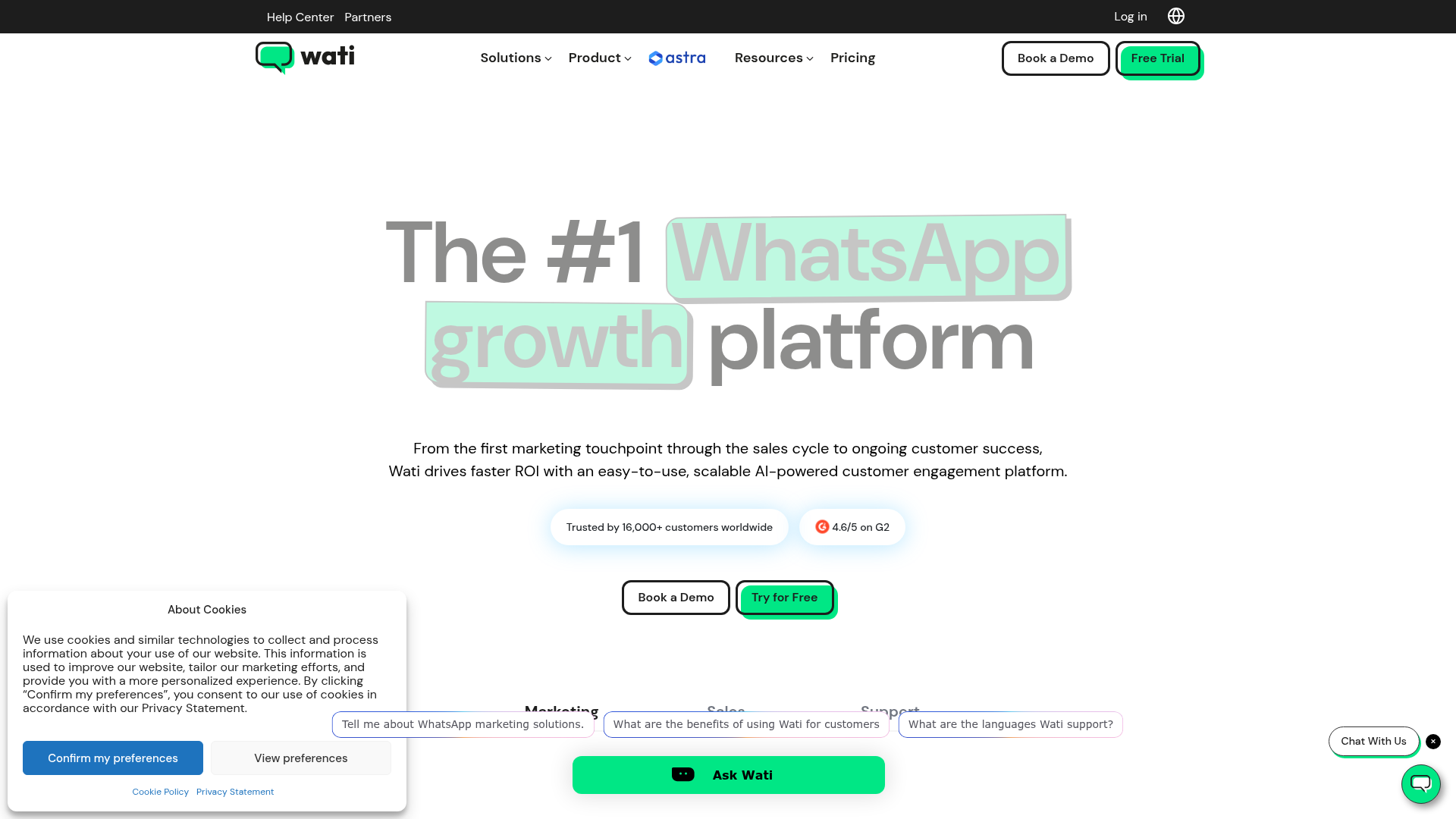
Best for: WhatsApp-first SMB teams that want broadcasts and inbox management
Wati is purpose-built for WhatsApp and has a loyal following among SMBs.
Strengths
easy onboarding,
team inbox,
broadcasts and campaign workflows,
reasonable setup for non-technical users.
Limitations
can get expensive as volume grows,
AI sophistication is not always as strong as AI-native tools,
narrower multichannel flexibility.
Verdict
A solid WhatsApp chatbot software choice for SMBs that are primarily focused on WhatsApp campaigns and team inbox use.
6. Freshchat
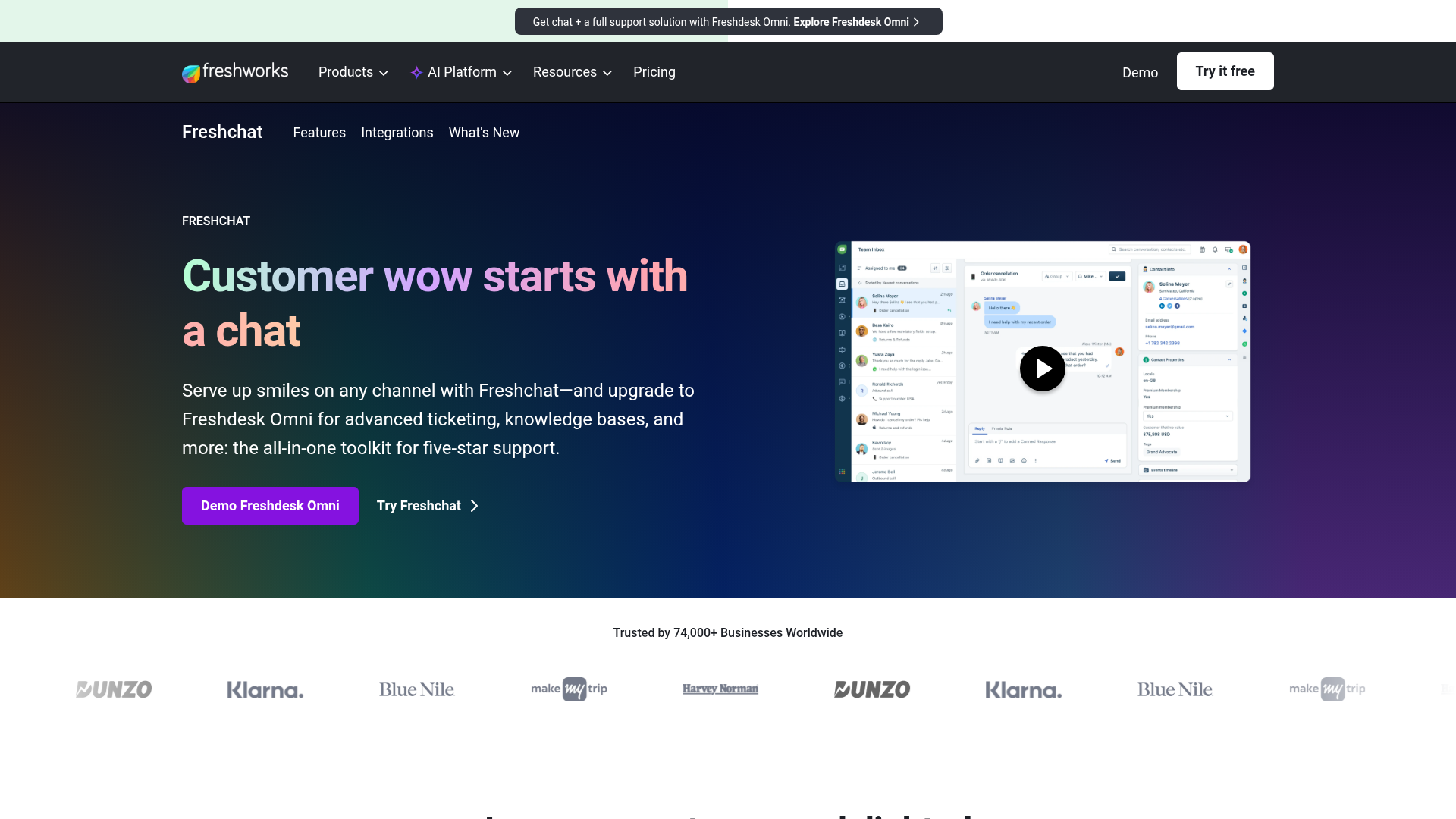
Best for: Support teams already in the Freshworks ecosystem
Freshchat is more support-suite than pure chatbot builder. It works well when ticketing, teamwork, and agent workflows are core priorities.
Strengths
shared support environment,
Freddy AI assistance,
reporting and collaboration tools,
useful for support-heavy operations.
Limitations
per-seat costs can rise quickly,
less marketing-centric than other options,
some features can feel buried.
Verdict
A good choice when support structure matters more than commerce or advanced WhatsApp marketing.
7. Intercom
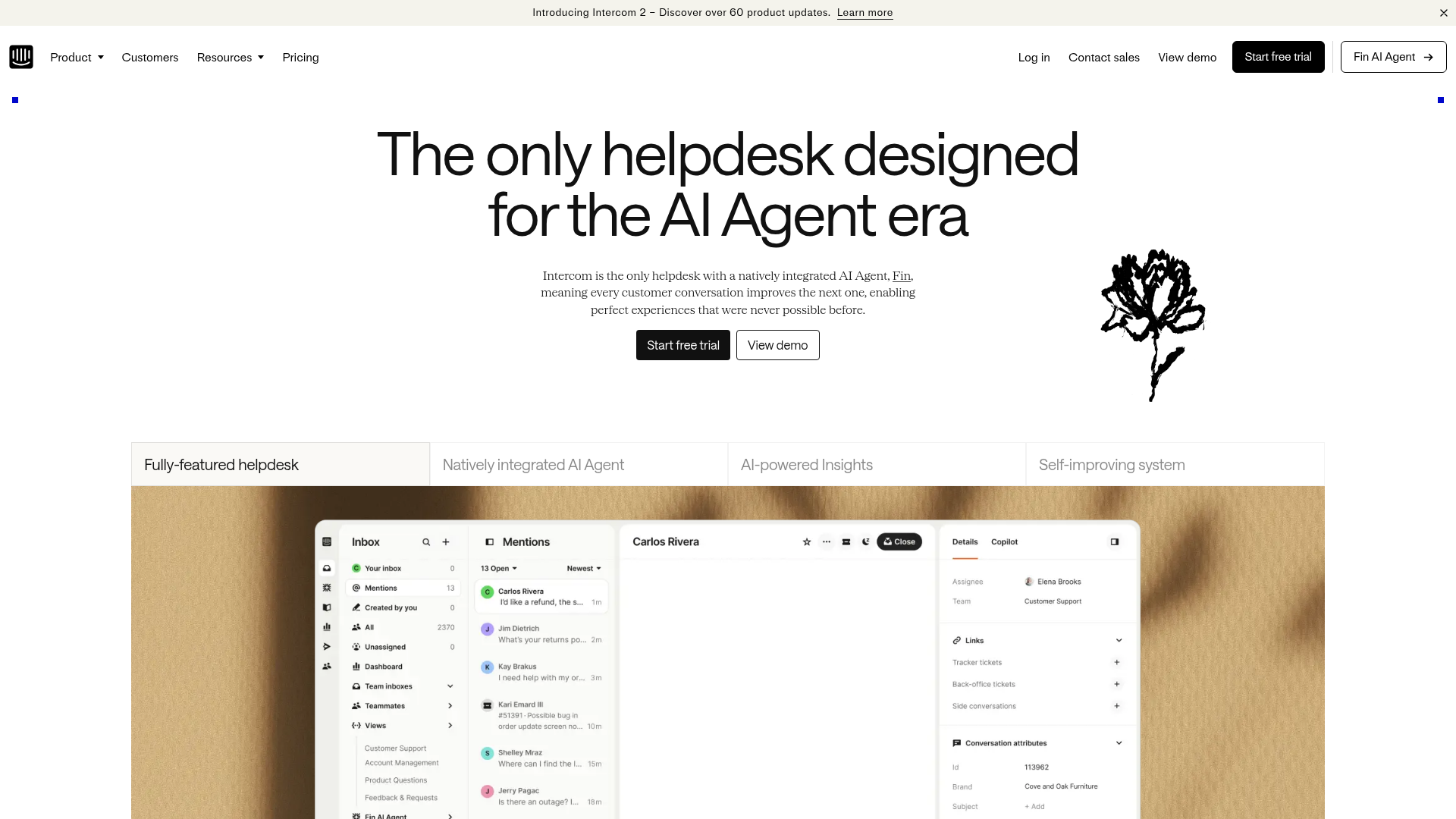
Best for: Enterprise teams needing premium customer messaging infrastructure
Intercom is a polished platform with strong automation, AI, and customer communication features.
Strengths
refined user experience,
advanced support and messaging features,
good reporting,
enterprise-friendly.
Limitations
expensive,
can feel heavy for small teams,
WhatsApp is one part of a broader platform rather than the center of it.
Verdict
A strong enterprise option, especially for large organizations with budget and process maturity.
8. Kommunicate
Best for: Mid-market teams focused on AI-to-human handoff
Kommunicate is often praised for balancing bot automation with agent takeover.
Strengths
strong handoff experience,
integrations and dashboarding,
good fit for support-heavy workflows.
Limitations
more advanced setups can involve a learning curve,
some deeper integrations may require higher plans.
Verdict
A capable support automation platform, particularly for teams prioritizing service visibility and escalation.
Comparison Table: Best WhatsApp Chatbot Tools in 2026
Platform | Best For | No-Code | AI | Shared Inbox | Marketing Automation | Commerce/Bookings | Ideal Buyer |
|---|---|---|---|---|---|---|---|
Trikon Tech | All-in-one WhatsApp growth and CX | Yes | Yes | Yes | Yes | Yes | Growing businesses, D2C, service brands, agencies |
Manychat | Social-led automation | Yes | Yes | Yes | Yes | Limited | Creators, D2C brands |
Chatbase | AI FAQ bots | Yes | Yes | Limited | No | No | SMBs needing quick AI support |
Botpress | Custom AI builds | Partial | Yes | Partial | Limited | Limited | Developers, technical teams |
Wati | WhatsApp-first SMB workflows | Yes | Partial | Yes | Yes | Limited | SMBs |
Freshchat | Support teams | Yes | Yes | Yes | Partial | Limited | Support organizations |
Intercom | Enterprise messaging | Yes | Yes | Yes | Yes | Limited | Large companies |
Kommunicate | AI + human support | Yes | Yes | Yes | Partial | Limited | Mid-market support teams |
Best Choice by Use Case
Best WhatsApp chatbot for e-commerce
Choose a platform that combines:
product catalog,
cart/order flows,
abandoned cart recovery,
broadcasts,
and support handoff.
Best fit: Trikon Tech
It combines commerce and marketing more directly than most chatbot-first tools.
Best WhatsApp chatbot for customer support
Look for:
AI FAQ resolution,
smart routing,
shared inbox,
SLA management,
agent assignment,
and conversation history.
Best fit: Trikon Tech or Freshchat
Trikon is stronger if you also need operational and revenue workflows. Freshchat is strong for support-only teams.
Best WhatsApp chatbot for marketing automation
You need:
segmentation,
template messaging,
drip sequences,
retargeting,
and campaign analytics.
Best fit: Trikon Tech, Manychat, or Wati
Trikon is strongest when you want campaign tools plus support and commerce in one stack.
Best WhatsApp chatbot for service businesses
You need:
appointment booking,
reminders,
payment requests,
confirmations,
and live handoff.
Best fit: Trikon Tech
This is one of the areas competitor listicles rarely emphasize, but it is where WhatsApp often delivers the fastest operational ROI.
Best WhatsApp chatbot for agencies
Agencies should prioritize:
no-code setup,
scalable client deployment,
centralized management,
white-label-friendly positioning,
and measurable outcomes.
Best fit: Trikon Tech
It is especially compelling for agencies packaging WhatsApp automation as a service.
Free WhatsApp Chatbot vs Paid Platform
A lot of searches are for whatsapp chatbot free or free whatsapp chatbot. The truth: free can work for testing, but serious business use almost always requires paid infrastructure.
Free tools are useful for
learning interfaces,
testing flows,
prototyping internal use cases,
validating whether customers respond.
Paid tools are required for
official API access,
reliable delivery,
team collaboration,
campaign automation,
reporting,
SLA workflows,
and production-grade support.
If WhatsApp matters to your business, the right question is not “Can I get a free WhatsApp bot?” It is “How fast can this tool pay for itself through better conversion, lower support load, and faster response time?”
How to Create a WhatsApp Chatbot the Right Way
Here is the simplest path.
Step 1: Define one primary business outcome
Pick one:
reduce repetitive support tickets,
qualify leads,
recover abandoned carts,
book appointments,
or centralize team conversations.
Step 2: Choose the right platform type
Simple FAQ AI bot: Chatbase
Marketing-focused automation: Manychat or Wati
Custom AI logic: Botpress
Full WhatsApp business system: Trikon
Step 3: Connect official WhatsApp Business API
This is easier with an official provider. Trikon’s partner status is a major trust advantage here.
Step 4: Build core flows
Start with:
greeting and opt-in,
FAQ handling,
lead capture,
product or booking journey,
escalation to human,
follow-up sequence.
Step 5: Add automation + human handoff
Pure automation is rarely enough. The best systems let bots handle repetition and agents handle nuance.
Step 6: Measure performance
Track:
first response time,
bot resolution rate,
handoff rate,
conversion rate,
booking rate,
revenue from campaigns,
and support load reduction.
WhatsApp Chatbot Integration: What Matters Most
The phrase whatsapp chatbot integration covers a lot. In practice, the most useful integrations are:
CRM sync,
e-commerce platform sync,
helpdesk and ticketing systems,
payment links,
calendars,
booking tools,
ad platform triggers,
and analytics/reporting.
The more operational work you can keep inside chat, the better the customer experience. That is another reason all-in-one platforms tend to outperform fragmented stacks over time.
What 2026 Winners Do Differently
The best WhatsApp teams in 2026 are not just automating replies. They are designing a full conversational journey.
They centralize support and sales
Instead of splitting tools, they manage service, marketing, and conversion from one place.
They use AI for repetition, not everything
AI handles common questions and triage. Humans handle edge cases, escalation, and high-value conversations.
They automate revenue moments
This includes:
retargeting,
reminders,
replenishment,
upsell prompts,
cart recovery,
and appointment follow-up.
They operate inside WhatsApp
Not just chatting, but booking, confirming, paying, and ordering.
They launch fast and iterate
They do not spend six months building a custom stack before learning what works.
Why Trikon Is the Best Strategic Choice for Most Businesses
If you compare the market honestly, most tools are optimized for one job:
social marketing,
AI Q&A,
support desk workflows,
or developer customization.
Trikon is one of the few that can support the full business journey on WhatsApp:
discover,
engage,
qualify,
support,
book,
sell,
and retain.
That is important because customer conversations do not happen in isolated categories. A support inquiry can become a sale. A campaign response can require an agent. A booking workflow may need reminders and payment collection. A cart recovery flow may need catalog context and human assistance.
Trikon’s model fits how real businesses operate.
Final Verdict
The best WhatsApp chat bot in 2026 is the one that matches your use case and organizational maturity.
If you want easy social-led automation, pick Manychat.
If you want quick AI on top of your content, pick Chatbase.
If you want developer-grade control, pick Botpress.
If you want WhatsApp-first SMB automation, pick Wati.
If you want enterprise messaging or support suites, look at Intercom, Freshchat, or Kommunicate.
But if you want to turn WhatsApp into a complete customer channel for support, marketing, operations, and commerce, Trikon Tech is the most strategic choice.
As an official WhatsApp Business API partner, Trikon gives growing teams the speed of no-code software with the business impact of a much larger stack. You can launch faster, automate more, reduce manual workload, improve CX, and drive revenue from the same channel your customers already prefer.
If your team wants a simple yet powerful WhatsApp chatbot platform without a large engineering lift, Trikon is the platform to try next.
FAQ
What are the best AI chatbots in 2026?
The best AI chatbots in 2026 include Trikon Tech, Manychat, Chatbase, Botpress, Wati, Freshchat, Intercom, and Kommunicate. The right choice depends on whether you need support automation, marketing workflows, commerce features, or a full WhatsApp business system.
Which is the best AI for WhatsApp?
For most businesses, Trikon Tech is one of the best AI options for WhatsApp because it combines AI automation, shared inbox, human handoff, campaigns, bookings, and commerce in one platform. If you only need AI answers from your knowledge base, Chatbase is also a strong option.
What is the cost of AI chatbot in 2026?
AI chatbot costs in 2026 range from free trial or entry-level plans to premium enterprise pricing, depending on features, API access, message volume, and number of agents. Most serious WhatsApp chatbot platforms are paid because production use requires official API infrastructure, automation, and collaboration tools.
Which is the most powerful AI chat bot?
The most powerful AI chatbot depends on the use case, but Botpress is one of the strongest for deep customization and advanced AI workflows. For businesses that want power plus practical deployment across support, marketing, and commerce, Trikon Tech offers a stronger all-around business solution.
What are the chatbot trends in 2026?
Key chatbot trends in 2026 include hybrid AI + human handoff, conversational commerce, no-code deployment, omnichannel support, operational workflows inside chat, and better use of customer context. Businesses are also prioritizing official API providers and measurable outcomes like faster response times and higher conversion.
Which is the no 1 AI app?
There is no universal number one AI app for every business because needs differ by channel and workflow. For WhatsApp-centric businesses, a platform like Trikon Tech can be the best choice because it combines AI, automation, support, marketing, and sales in one system.